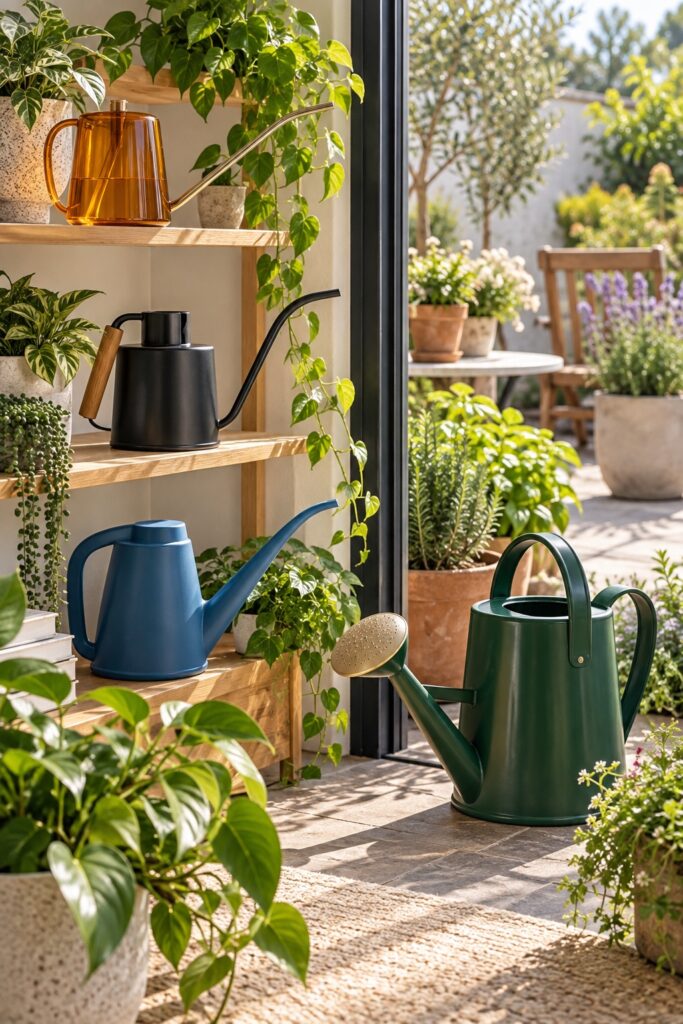
10 Long-Spout Watering Cans for Crowded Plant Shelves and Patio Pots

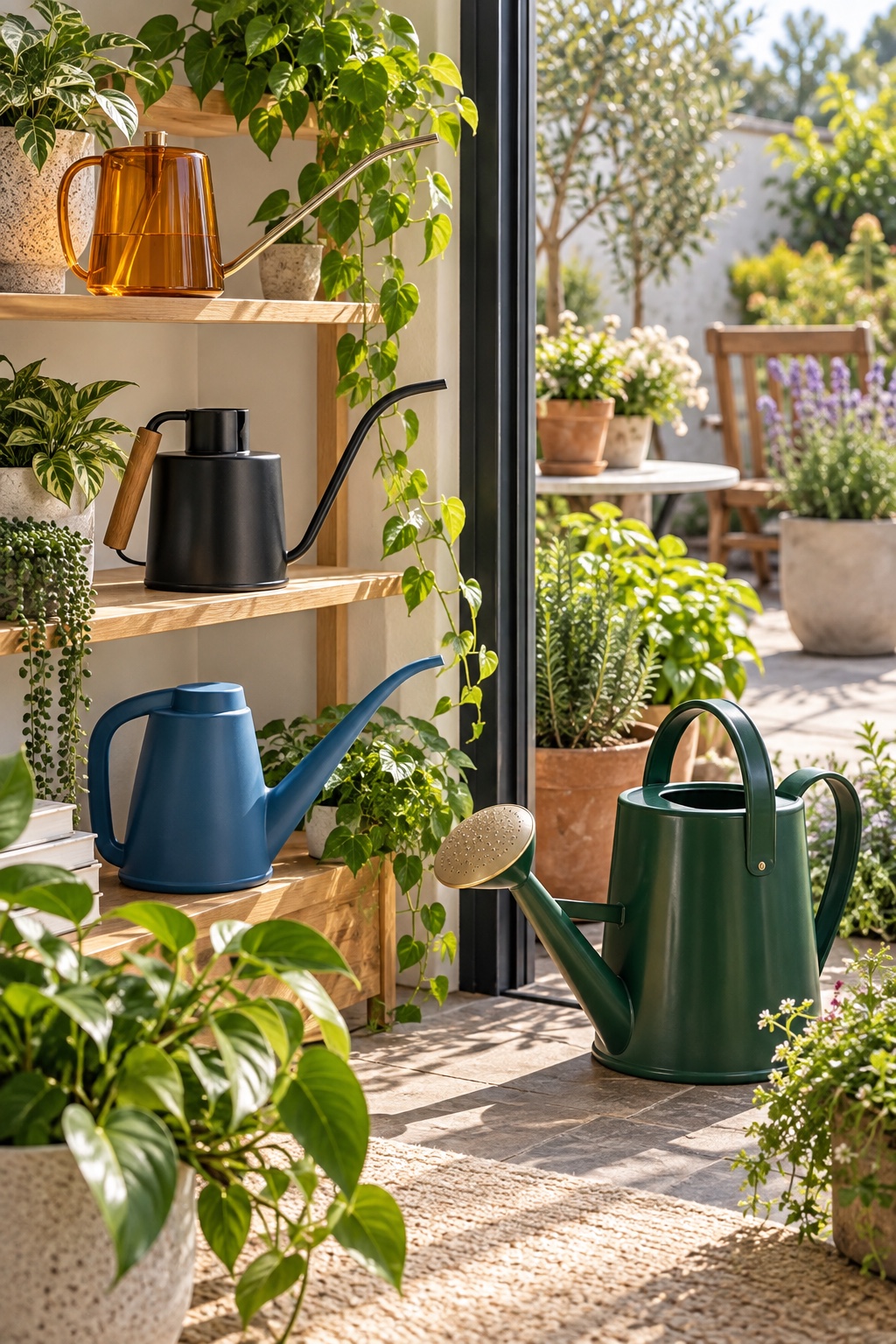
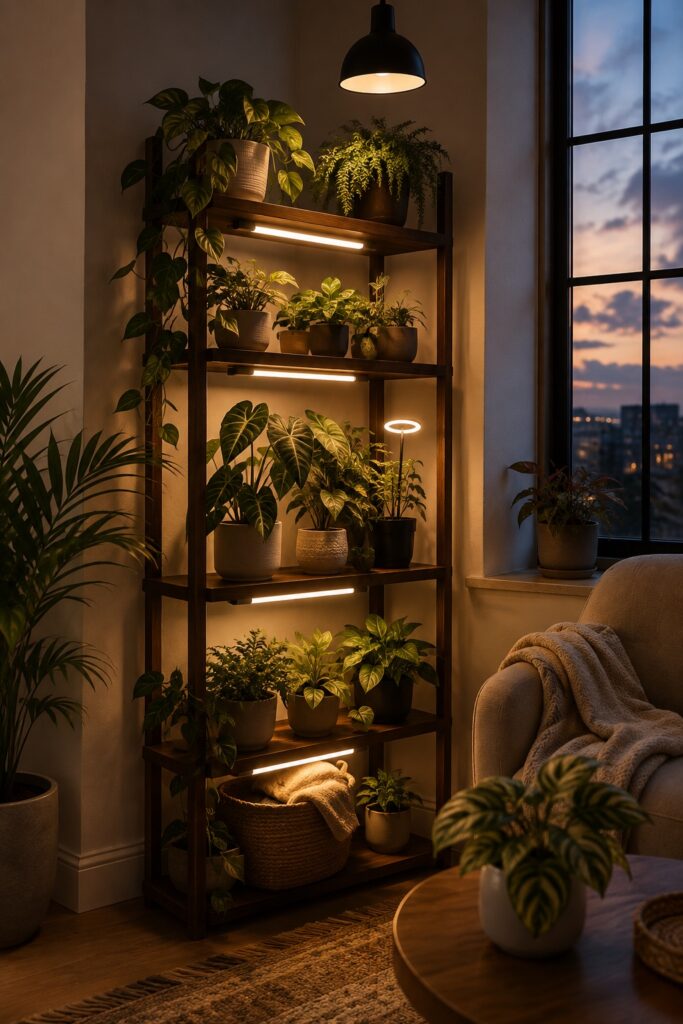
Watering a crowded plant shelf is mostly an access problem. A bulky can may hold plenty of water, but its short spout can force you to move pots, brush against foliage, or pour from an awkward angle.
A long-spout design lets you place water close to the potting mix while keeping leaves, furniture, and floors drier. The ten options below cover precise indoor watering, compact windowsills, and larger patio containers.
As an Amazon Associate, we earn from qualifying purchases.
How to choose a long-spout watering can
Start with capacity. A 32- to 56-ounce can is manageable around shelves and typically suits a modest houseplant collection.
A one- or two-gallon can reduces refills outdoors, but remember that a full gallon of water alone weighs about 8.3 pounds. For a large can, two gripping points make controlled pouring easier.
Next, match the outlet to the job. A narrow open spout places a focused stream at the soil line and works well among dense foliage.
A removable sprinkler rose spreads water gently across seedlings or outdoor containers. Check whether a rose is included, because a plain spout and a shower head serve different watering styles.
Finally, measure the storage spot as well as the space between plants. Long spouts can extend far beyond the reservoir.
Leave enough shelf depth so the can will not be knocked down, and store a detachable spout or rose where it will not be crushed. Empty indoor cans after use when possible, then allow the reservoir and nozzle to dry.
1. DR.UANG 1L Amber Brown Indoor Watering Can
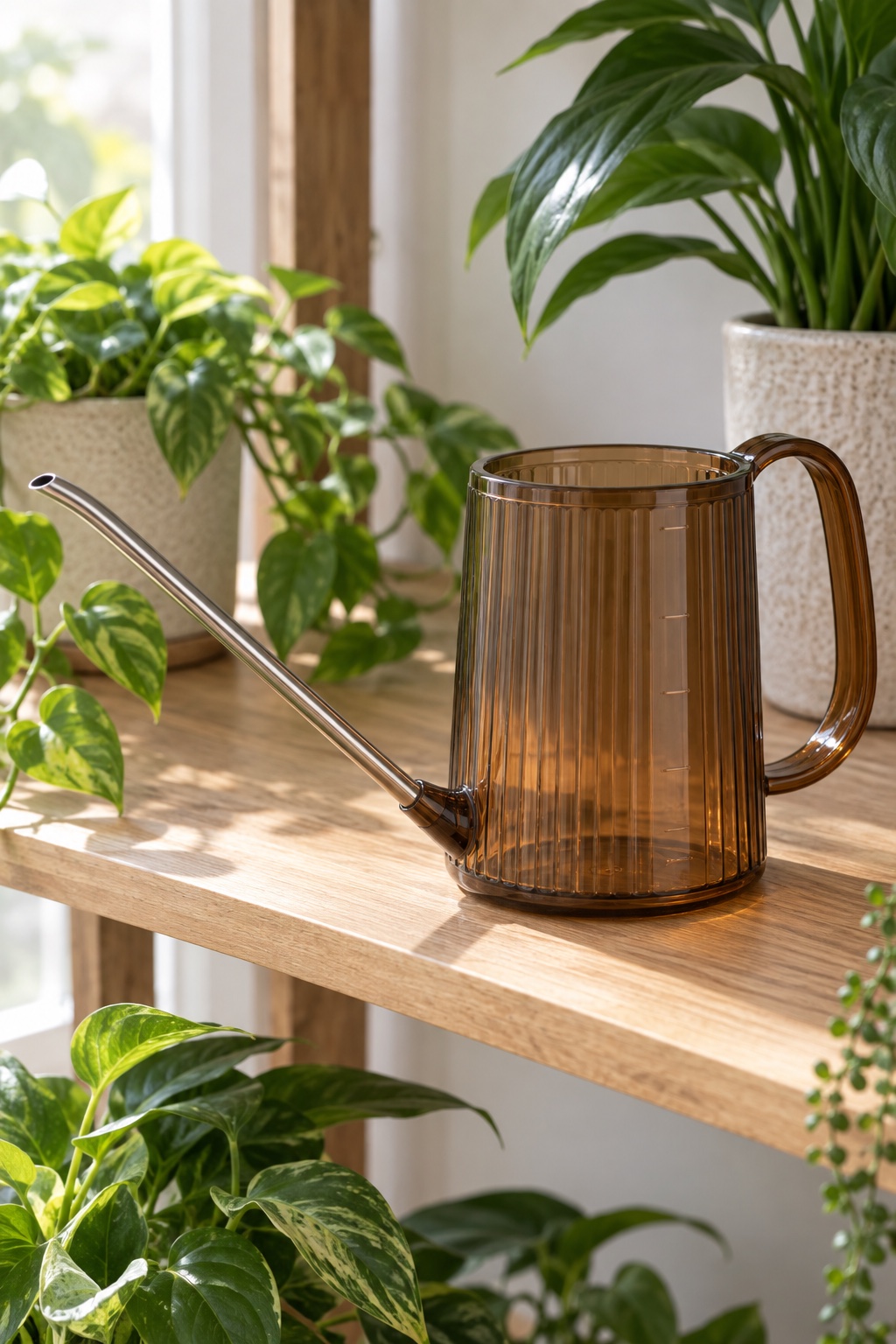
| Capacity | 1 liter |
|---|---|
| Body | Amber-brown translucent plastic |
| Spout | Long detachable stainless steel |
| Approximate size | 4.3 × 6.7 × 8.1 inches |
| Best fit | Crowded indoor plant shelves |
The DR.UANG combines a narrow metal spout with a tall, ribbed one-liter body. Its amber tint makes it easier to see the water level than an opaque can while still looking more decorative than a plain utility bottle. The spout connects low on the reservoir, helping the stream reach small pots without requiring an extreme wrist angle.
This size makes sense for apartment plant stands, desktops, and kitchen herb shelves. It is small enough to maneuver between leaves, yet holds more than a typical squeeze bottle. The wide open top is convenient for filling and for wiping the inside with a soft bottle brush.
Push the detachable spout firmly into place before filling, and test the connection over a sink the first time. Avoid lifting a full can by the metal spout. Rinse away fertilizer residue promptly, and let both pieces dry separately to reduce buildup around the connection.
2. Qilebi 2-Gallon Alpine Green Watering Can
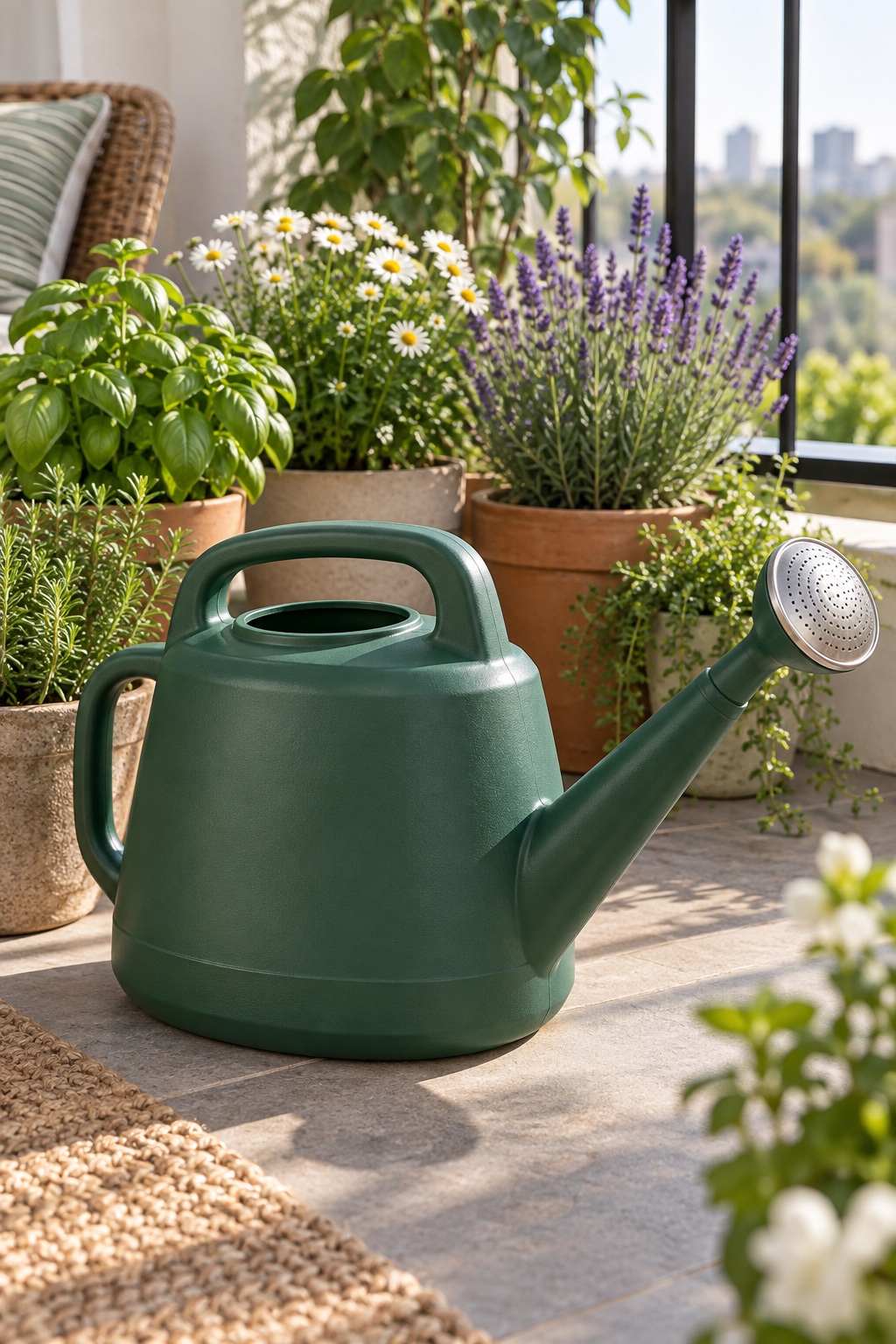
| Capacity | 2 gallons |
|---|---|
| Material | Polypropylene resin |
| Handles | Two integrated grips |
| Outlet | Detachable spout and stainless steel rose |
| Best fit | Patio pots and raised planters |
The Qilebi is the high-capacity choice in this group. Its broad alpine-green body uses two handles, which is useful because two gallons of water creates a substantial carrying load. The long detachable spout reaches past container foliage, while the round stainless steel rose spreads flow across a wider patch of potting mix.
Use the rose for seedlings, shallow planters, and freshly potted plants that could be disturbed by a concentrated stream. Remove it when you need to direct water into a deep pot or beneath a dense canopy. The wide top opening also simplifies filling from an outdoor faucet or utility sink.
For safer handling, fill the can only to a weight you can comfortably carry with both hands. Keep the connector and filter clear of grit, and rinse the sprinkler face if its holes begin producing uneven streams. Store detachable pieces together so the can remains ready for the next watering round.
3. Mkono Two-Pack Squeeze Watering Bottles
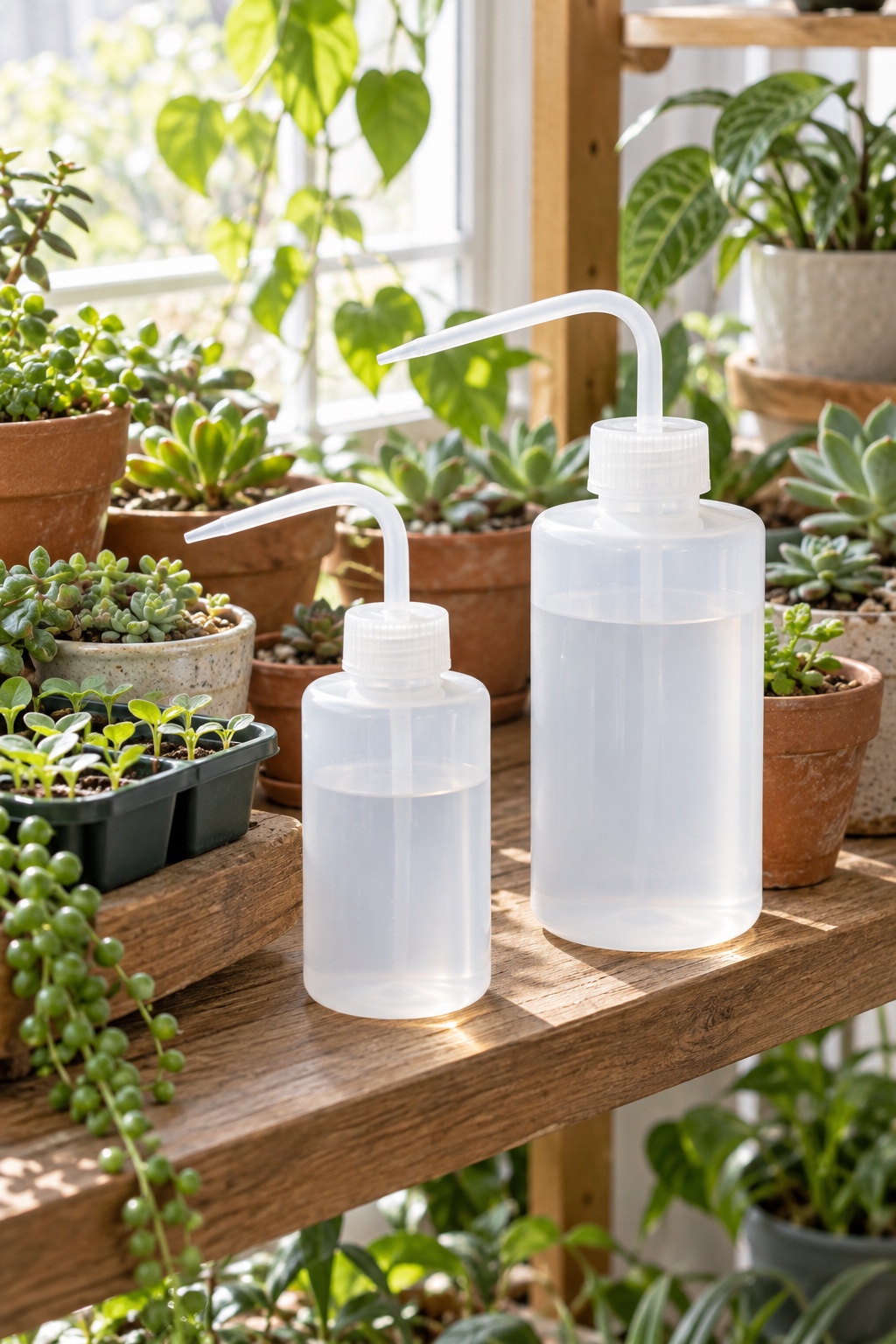
| Set size | Two bottles |
|---|---|
| Capacities | 250 ml and 500 ml |
| Body | Translucent squeeze plastic |
| Spout | Long, narrow, bent tip |
| Best fit | Succulents, seedlings, and very small pots |
These Mkono bottles trade carrying capacity for close control. The set contains one 250-milliliter bottle and one 500-milliliter bottle, so you can reserve the smaller size for tiny pots and use the larger one for a compact collection. Both have long bent tips that reach between rosettes or under low leaves.
A squeeze bottle is especially helpful when a traditional handle and reservoir will not fit between pots. Apply gentle, steady pressure rather than a hard squeeze; the narrow outlet can deliver water faster than expected when the bottle is compressed sharply. Because the bottles are translucent, the remaining water is easy to monitor.
These are best treated as precision tools rather than all-day watering cans. Unscrew the caps after use, flush the tips with clean water, and allow the bottles to air-dry. If fertilizer is mixed in a bottle, label its purpose outside the living area and keep it away from children and pets.
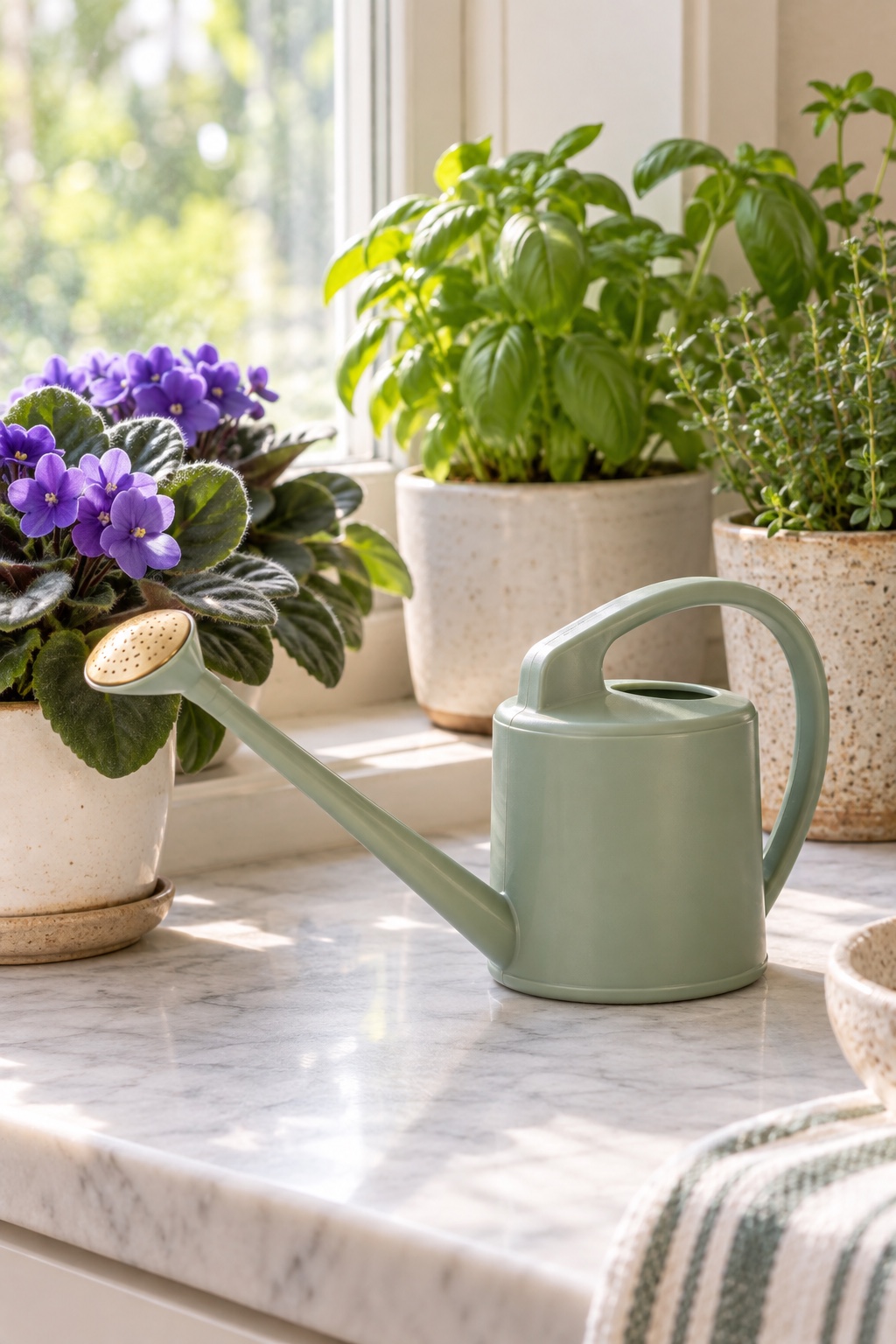
4. Haws Handy One-Pint Sage Green Watering Can
| Advertised capacity | 1 pint |
|---|---|
| Body | Sage-green plastic |
| Outlet | Detachable brass-faced rose |
| Form | Compact cylindrical reservoir |
| Best fit | Small herbs, violets, and seedlings |
The Haws Handy is a compact option for people who want a gentle shower rather than a single stream. Its sage-green plastic body has the familiar cylindrical Haws form, a curved upper handle, and a long slim spout. A detachable round rose with a brass face distributes water over a small area.
The one-pint advertised size is useful on a kitchen windowsill or propagation station where a two-gallon container would be excessive. Aim the rose close to the soil to limit splashing. For precise watering beneath leaves, remove the rose and pour slowly through the open spout.
Do not leave the brass-faced rose resting in wet soil or standing water. After use, rinse the holes and let the rose dry before storage. If mineral deposits restrict the pattern, follow the manufacturer’s care directions and use a nonabrasive approach so the small outlet holes are not enlarged.
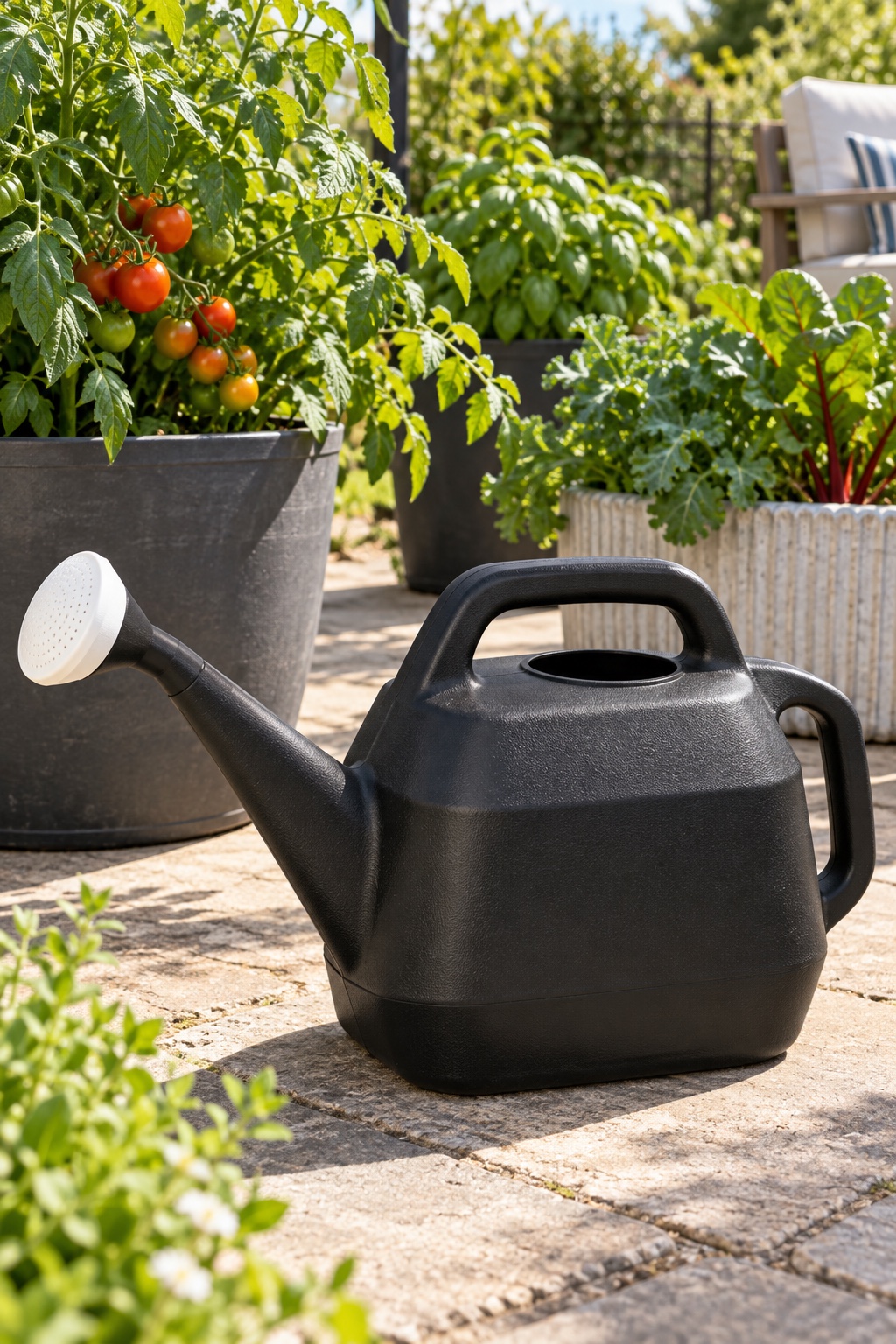
5. Chapin 47998 2-Gallon Watering Can
| Capacity | 2 gallons |
|---|---|
| Body | Black recycled polymer |
| Handling | Top handle and rear grip |
| Nozzle | Removable white Tru-Stream shower head |
| Best fit | Vegetable containers and patio pots |
The Chapin 47998 uses a broad black tank, a large top handle, and a separate rear grip. That two-point arrangement helps support the load while tilting a full two-gallon can. Its molded spout ends in a removable white shower nozzle that softens the stream for containers and garden beds.
This model suits a patio with several medium or large planters, especially when repeated trips to the faucet are inconvenient. The wide opening speeds filling, while the squat reservoir should feel more stable on the ground than a tall narrow indoor can. Remove the nozzle when a direct pour is more appropriate.
Lift with both hands when the tank is full and keep the path between the faucet and pots clear. Check the nozzle gasket when attaching the shower head; a twisted or dirty gasket can encourage drips. Rinse the tank and nozzle after soluble fertilizer, then store the can out of prolonged harsh weather.
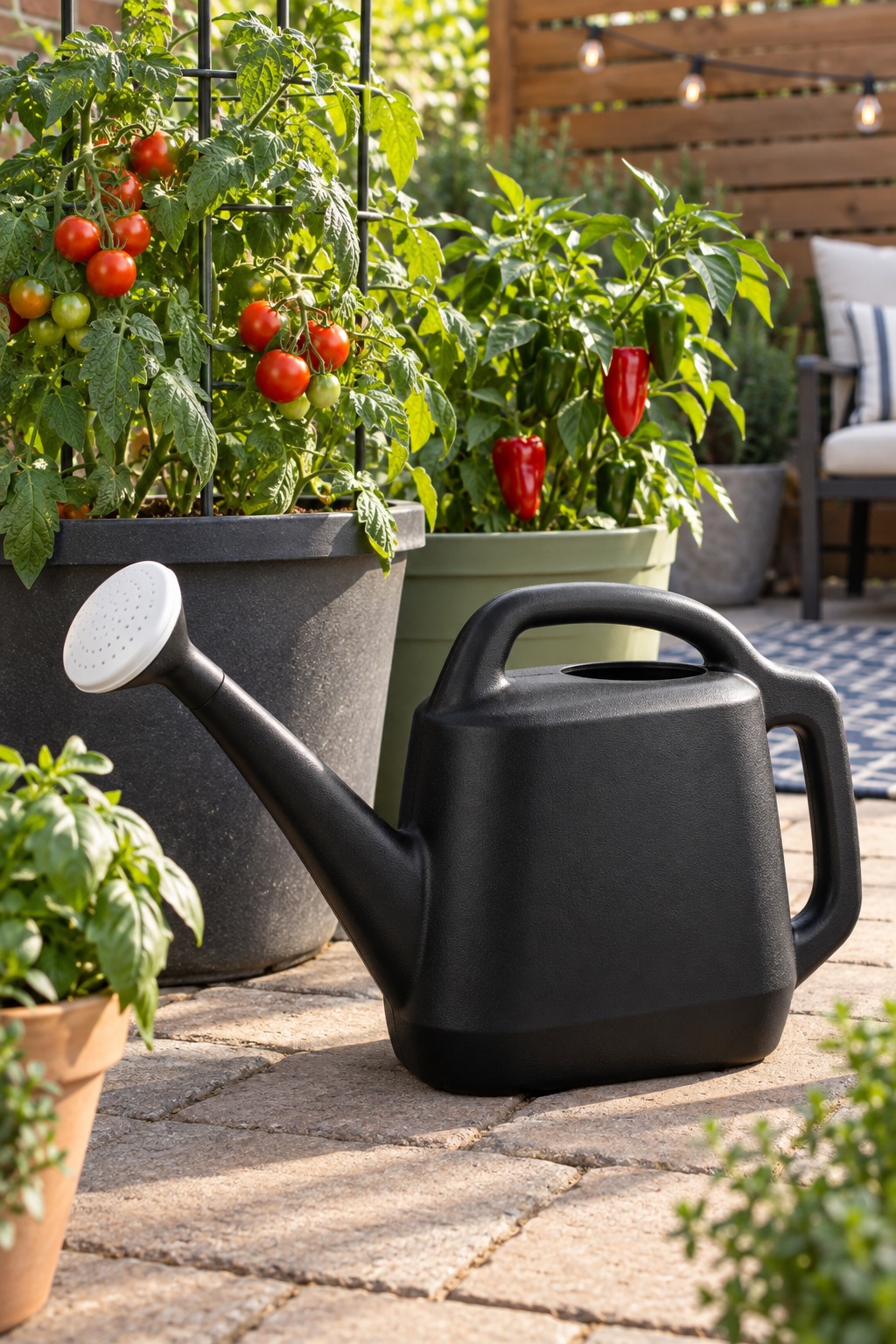
6. Chapin 48010 2-Gallon Watering Can
| Capacity | 2 gallons |
|---|---|
| Tank | Lightweight recycled plastic |
| Color | Black |
| Spout | Long drip-resistant design |
| Best fit | Mixed patio vegetables and flowers |
The current Chapin 48010 listing is another two-gallon option built around a lightweight recycled-plastic tank. Its black, broad-profile body is intended for outdoor watering, with an extended spout that brings the outlet closer to container soil. Multiple grip points support controlled tipping as the water level changes.
Choose this capacity when your patio routine involves several thirsty containers. It can reduce refill trips, but there is no benefit in overfilling it. Leaving a little headroom makes the can easier to start and stop without water surging through the spout.
Set the can on a level surface while filling, and use both grips when carrying a heavy load. Periodically inspect the spout and removable outlet components for trapped potting mix or mineral scale. Drain it before freezing temperatures and keep it away from high-traffic walkways where the extended spout could become a trip hazard.
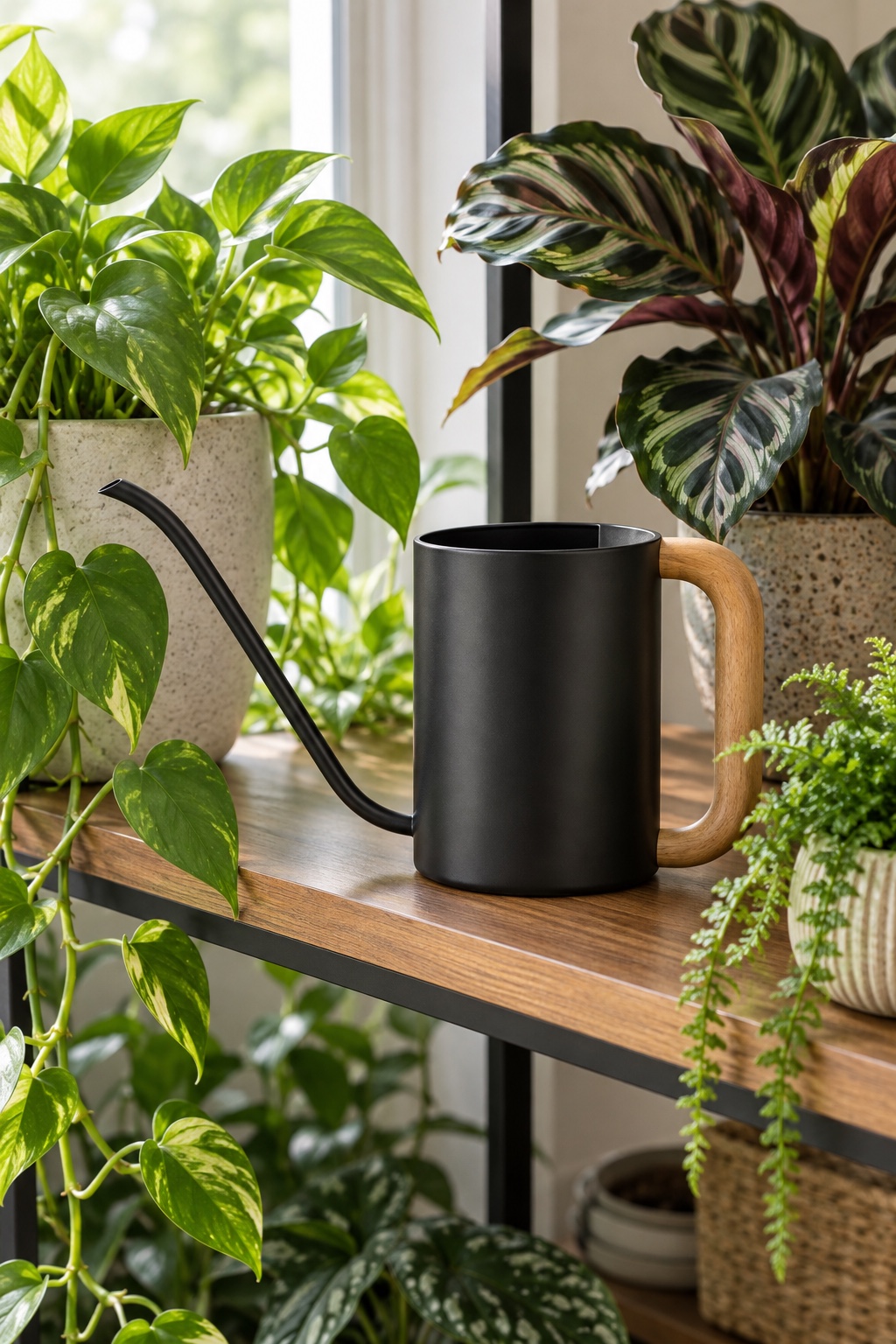
7. HB Design Co 35-Ounce Black Metal Watering Can
| Capacity | 35 ounces |
|---|---|
| Body | Matte-black stainless steel |
| Handle | Rounded natural wood |
| Spout | Long narrow gooseneck |
| Best fit | Decor-focused indoor plant shelves |
This HB Design Co can pairs a matte-black cylindrical steel reservoir with a rounded natural-wood handle. Its long, narrow gooseneck begins low on the body and is designed for placing water near the soil rather than washing over foliage. The compact 35-ounce capacity keeps the overall form suitable for indoor use.
The wood-and-metal combination can remain presentable on an open plant shelf, while the half-open top allows straightforward refilling. It is a good match for pothos, calatheas, ferns, and other plants grouped closely together. Pour slowly until you learn how quickly water travels through the long tube.
Wipe splashes from the steel exterior and wooden handle after each use. Do not leave standing water in the can for long periods, particularly if fertilizer has been added. Allow the reservoir to dry with the opening uncovered, and protect the finish from abrasive scrubbers that may create visible marks.
8. Bloem Aqua Rite 56-Ounce Classic Blue Watering Can
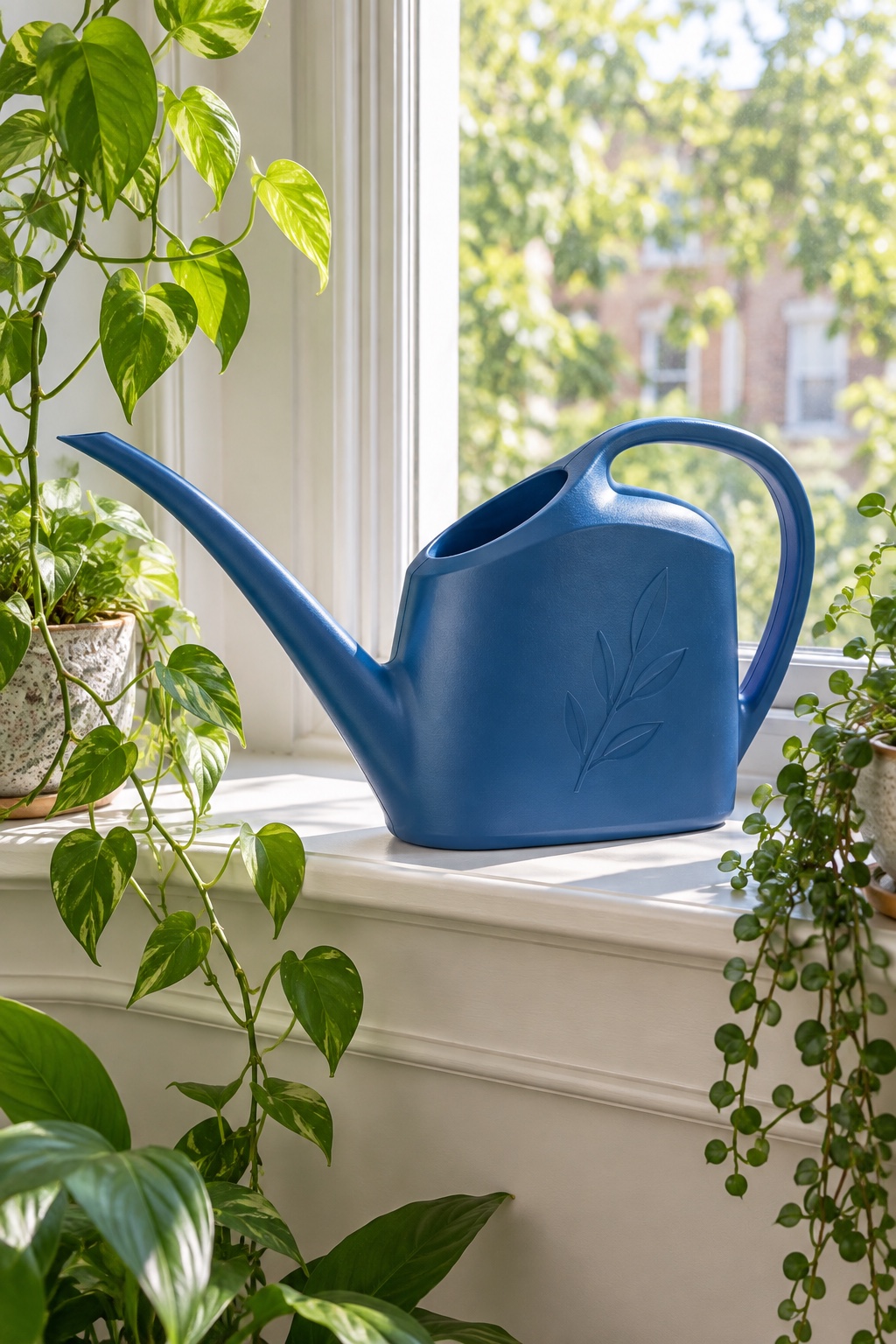
| Capacity | 56 ounces |
|---|---|
| Material | UV-protected plastic |
| Construction | One-piece body and spout |
| Color | Classic Blue |
| Best fit | Narrow windowsills and shelf storage |
The Bloem Aqua Rite has a notably slim, flattened profile. Its Classic Blue plastic body, molded spout, and integrated handle form one straightforward unit, so there is no loose nozzle to misplace. The 56-ounce capacity lands between a precision squeeze bottle and a large outdoor can.
Its narrow footprint is useful when storage depth matters. Place it beside a plant shelf or in a utility cabinet after measuring the full spout length, not just the reservoir. The offset opening makes refilling accessible while leaving the handle available for carrying and tipping.
Because the spout is molded into the body, clean it by flushing fresh water through the can rather than attempting to detach it. A flexible bottle brush can help around the fill opening, but avoid forcing a rigid tool down the narrow spout. Empty and dry it before long-term storage.
9. Fasmov 1-Gallon Yellow Watering Can
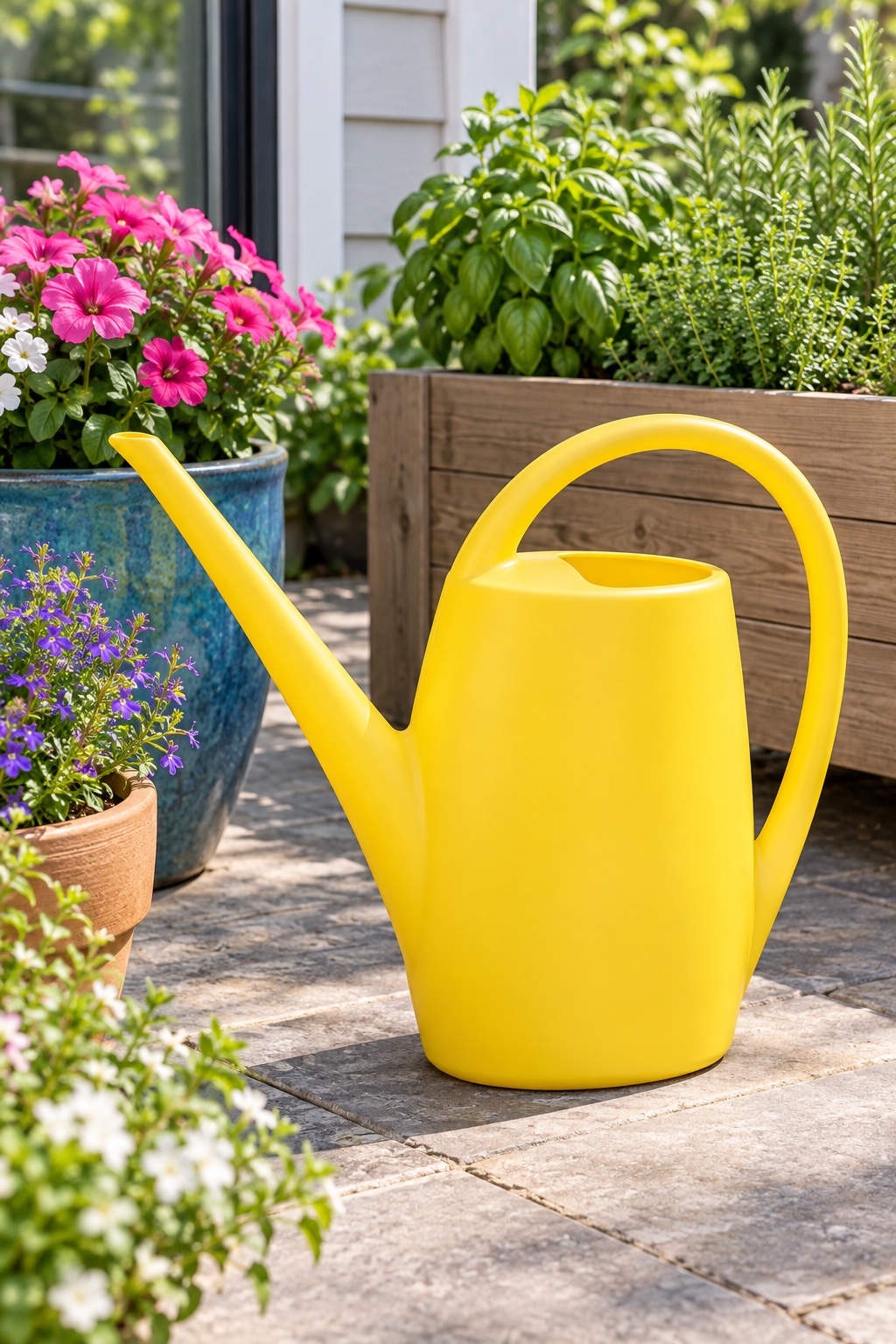
| Capacity | 1 gallon |
|---|---|
| Material | Plastic |
| Color | Bright yellow |
| Outlet | Long integrated open spout |
| Best fit | Small patios and raised herb beds |
The Fasmov one-gallon can uses a tall oval body, an integrated long spout, and a large continuous loop handle. Its bright-yellow finish is easy to spot among outdoor supplies. With no sprinkler rose at the outlet, it delivers a direct stream suited to individual containers and the base of established plants.
One gallon is a practical middle ground for a small patio: it reduces refill trips without reaching the loaded weight of a two-gallon model. The high loop handle offers room to adjust hand position as the balance shifts during pouring. Aim the open spout close to the soil and reduce the tilt when watering small pots.
Keep the fill opening clear of loose potting mix, which can travel into the fixed spout. Flush it with clean water after feeding plants, and store it upright so the extended outlet is not bent under other tools. In cold climates, drain the body completely before temperatures fall below freezing.
10. Goowin 47-Ounce Gray Watering Can Set
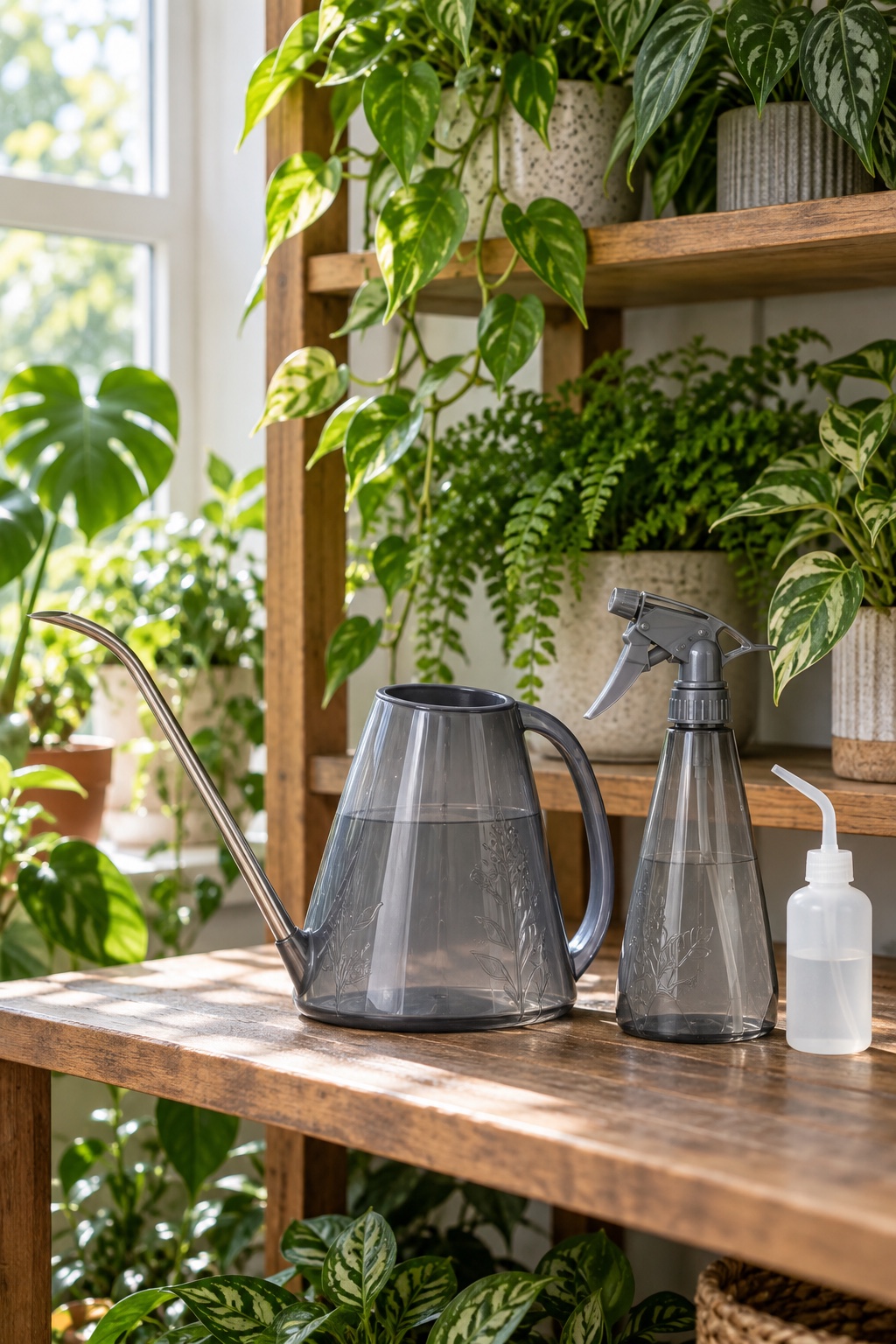
| Main can | 47 ounces |
|---|---|
| Included spray bottle | 16 ounces |
| Included squeeze bottle | 8.5 ounces |
| Color | Gray |
| Best fit | Mixed indoor plant-care tasks |
The Goowin package combines three watering tools: a 47-ounce gray watering can with a long metal spout, a 16-ounce trigger spray bottle, and an 8.5-ounce squeeze bottle with a bent tip. The set covers regular watering, targeted delivery, and light misting without requiring separate purchases.
Use the main can for everyday pots, the small squeeze bottle for seedlings or tight gaps, and the spray bottle only for plants or maintenance tasks where misting is appropriate. Not every houseplant benefits from wet foliage, so base the method on the plant’s care needs rather than using every included tool automatically.
Keep plain-water and fertilizer uses clearly separated. Rinse each vessel and run clean water through its outlet after feeding plants. Release pressure from the trigger bottle before storage, let all three pieces dry, and keep the small squeeze bottle somewhere it will not be mistaken for a food or personal-care container.
Watering technique for crowded shelves
Check the potting mix before reaching for the can. Push a finger into the top inch when appropriate for the plant, or use the plant’s normal moisture-check method.
Watering on a fixed calendar can keep moisture-sensitive plants too wet. Grouping plants by similar needs also makes a crowded shelf easier to manage.
Guide the spout beneath the foliage and close to the potting mix. Pour slowly around more than one side of the pot until excess water begins to reach the drainage tray.
Empty standing water from decorative cachepots and saucers so roots are not left submerged. Protect wood shelves with waterproof trays, and wipe spills immediately.
For patio containers, water early enough that leaves and hard surfaces can dry before night.
Lift large cans with both hands and avoid leaning over railings while pouring. If a two-gallon load feels unstable, fill it halfway; capacity is an option, not a requirement.
Frequently asked questions
Is a metal or plastic watering can better indoors?
Both can work. Plastic is lightweight and often translucent, while coated metal can feel more decorative and rigid. The most important features are a controllable spout, a comfortable filled weight, and an opening that can be cleaned.
Do indoor plants need a sprinkler rose?
Usually not. A narrow open spout offers better control for individual pots. A fine rose can be helpful for seedling trays or broad shallow planters, provided the flow is gentle enough not to disturb the soil.
How large should an indoor watering can be?
For a small collection, roughly one liter to 56 ounces is often convenient. Choose a larger reservoir only if you can carry and tip it comfortably in the available space.
How do I prevent mineral buildup in a narrow spout?
Empty the can after use, flush it periodically with clean water, and let it dry. Follow the manufacturer’s instructions for stubborn deposits, especially when metal finishes, gaskets, or brass components are involved.
Can I leave fertilizer solution in the watering can?
It is better to mix only what you need, then rinse the reservoir and spout. Residue can crystallize, clog small outlets, damage finishes, or create an unsafe unlabeled liquid.
Final takeaway
The best watering can is the one that reaches your pots without creating an awkward, heavy pour. Small squeeze bottles excel in very tight gaps, slim one-piece cans store neatly, and two-gallon models reduce outdoor refill trips.
Match the capacity and outlet style to your actual plants, then maintain the spout so every watering session stays controlled.