11 Self-Watering Planters for Indoor Herbs and Thirsty Houseplants

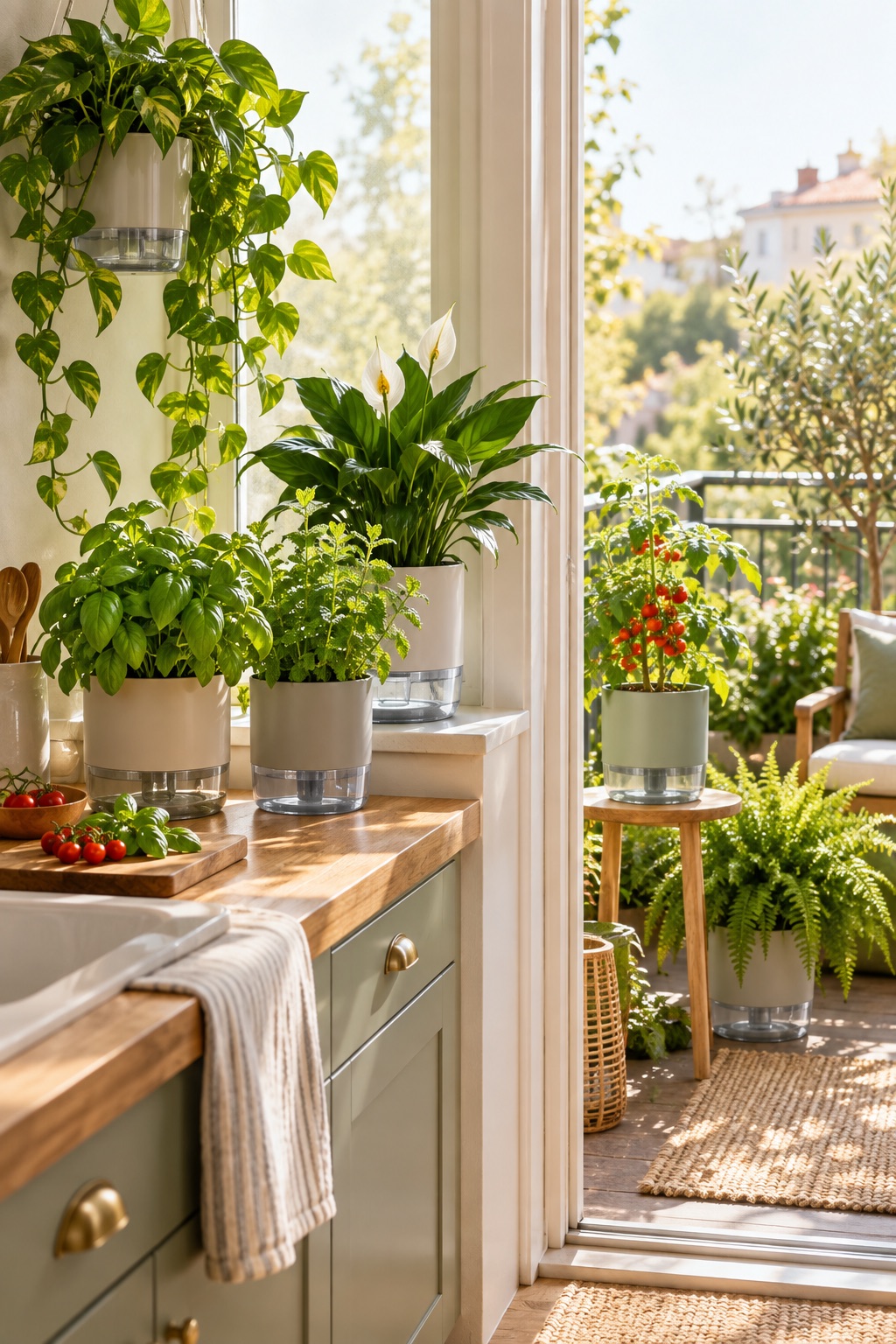
Self-watering planters can make indoor plant care more forgiving, but they are not all built for the same job. A small wick pot may be ideal for parsley on a windowsill, while an established monstera needs a much wider root zone and a reservoir that is easy to inspect.
The best choice matches the plant, the available light, and the way you actually maintain your home.
As an Amazon Associate, we earn from qualifying purchases.
This guide compares 11 current planter formats for indoor herbs and moisture-loving houseplants. Availability can change, so confirm the selected size and color on Amazon before ordering.
Quick comparison
| Pick | Best for | Key design |
|---|---|---|
| Gardenix Decor 3-Pack | Starter herb collections | Nested pots with water indicators |
| Bloem Ariana 6-Inch | Single compact plants | Reservoir disk and optional drainage |
| Lechuza Balconera Color 80 | Long windows or ledges | Removable inserts and level indicator |
| Vego Garden Trellis Planter | Compact tomatoes | Tall reservoir planter with trellis |
| Vugosson 7-Piece Set | Mixed plant sizes | Multiple shapes with wick reservoirs |
| OurWarm Windowsill Set | Kitchen herbs | Rectangular pots with level windows |
| WSMKSZ 12-Inch Planters | Larger foliage plants | Deep, wide planter format |
| T4U 6-Inch 4-Pack | Desk and shelf plants | Compact pots with visible levels |
| HBServices USA 8-Inch | Peace lilies and pothos | Soil-contact legs and aerated base |
| Mkono 4-Inch 3-Pack | Seedlings and small herbs | Simple wick system |
| DECOPOTS 7.1-Inch 3-Pack | Decor-focused houseplants | Level indicator and nested reservoir |
1. Gardenix Decor Self-Watering Pots 3-Pack
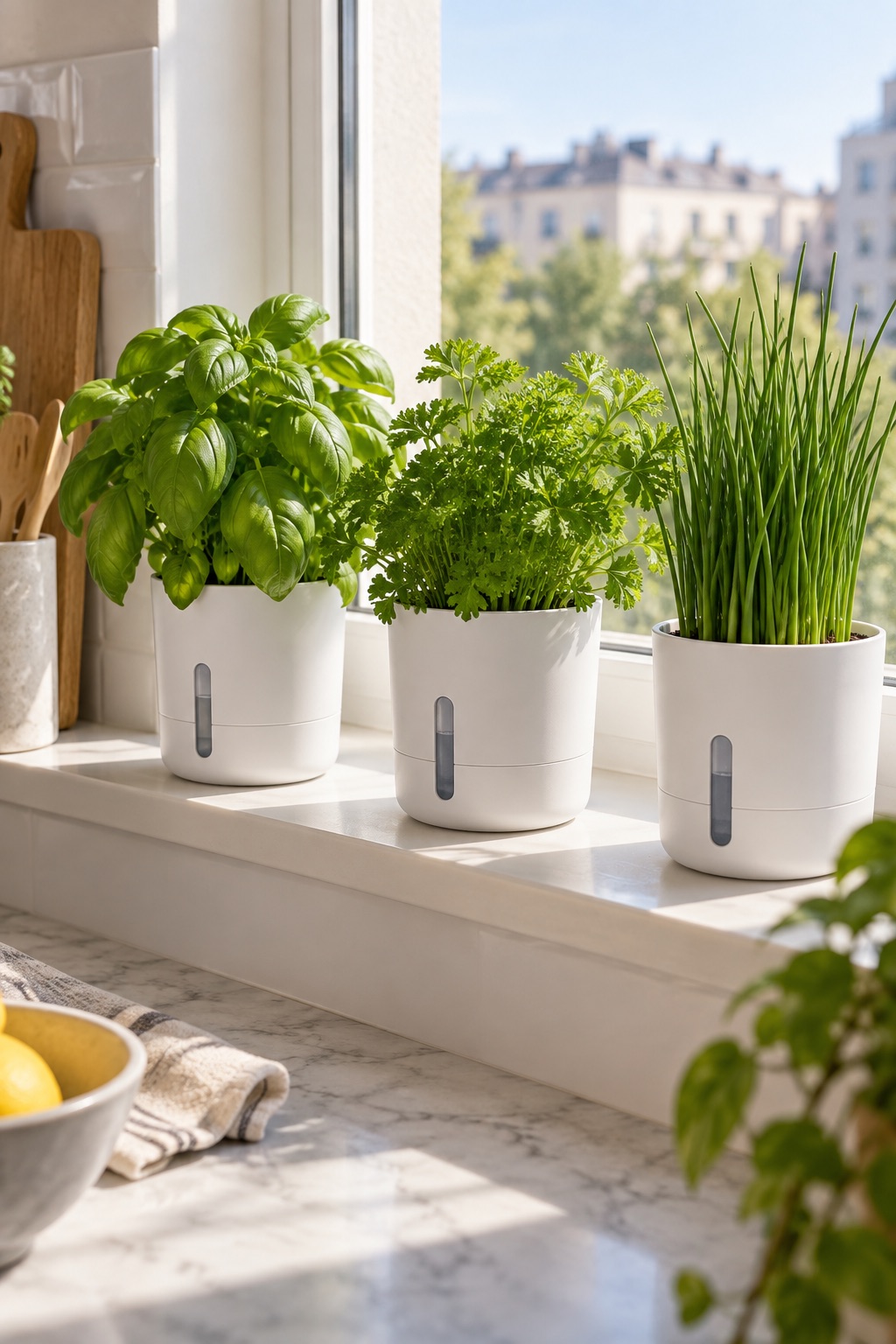
This three-pot set is a practical starting point for basil, parsley, chives, African violets, and other compact plants that prefer fairly even moisture. Each planter uses a nested inner and outer body, allowing water to remain below the main root zone instead of soaking the entire potting mix.
The visible water indicator is the useful feature here. It lets you check the reservoir without lifting a wet pot from a shelf. The set also includes coco coir, although a loose indoor potting mix amended with perlite is often easier to manage for long-term herb growing.
Plan for roughly a 7-inch footprint per pot and leave a little clearance around the indicator. After repotting, water from the top for the first one to two weeks so roots establish through the upper mix before depending on the reservoir.
Key specifications: three compact plastic pots; approximately 7-inch format; nested reservoir; water-level indicator; coco coir included.
2. Bloem Ariana 6-Inch Self-Watering Planter
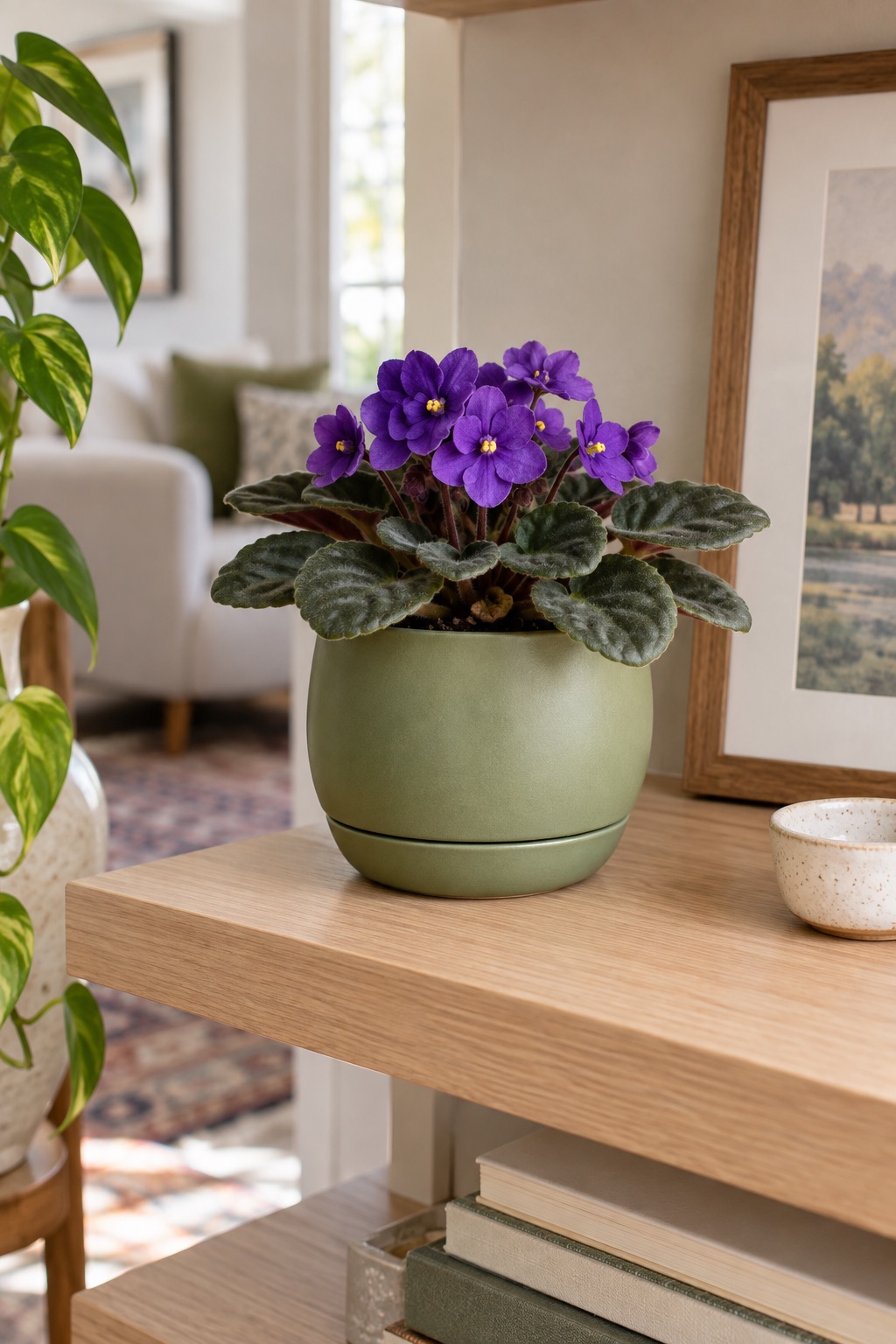
The Bloem Ariana is a simple option for one compact plant rather than a coordinated set. Its self-watering disk creates a small chamber under the potting mix, and the rolled rim makes the lightweight planter easier to move when you need to clean the shelf.
This format is especially useful when you want a conventional flowerpot appearance without a separate external reservoir. The product page lists optional knockout drainage holes, so indoor users should keep those closed unless the pot sits on a watertight saucer. Outdoor users can open them to prevent rain from saturating the mix.
A 6-inch pot is best for a modest root ball. Do not move a plant directly from a 3-inch nursery pot into a dramatically oversized container; about 1 to 2 inches of extra diameter is usually enough.
Key specifications: 6-inch round format; plastic resin construction; self-watering disk; optional drainage holes; indoor or outdoor use.
3. Lechuza Balconera Color 80 Planter
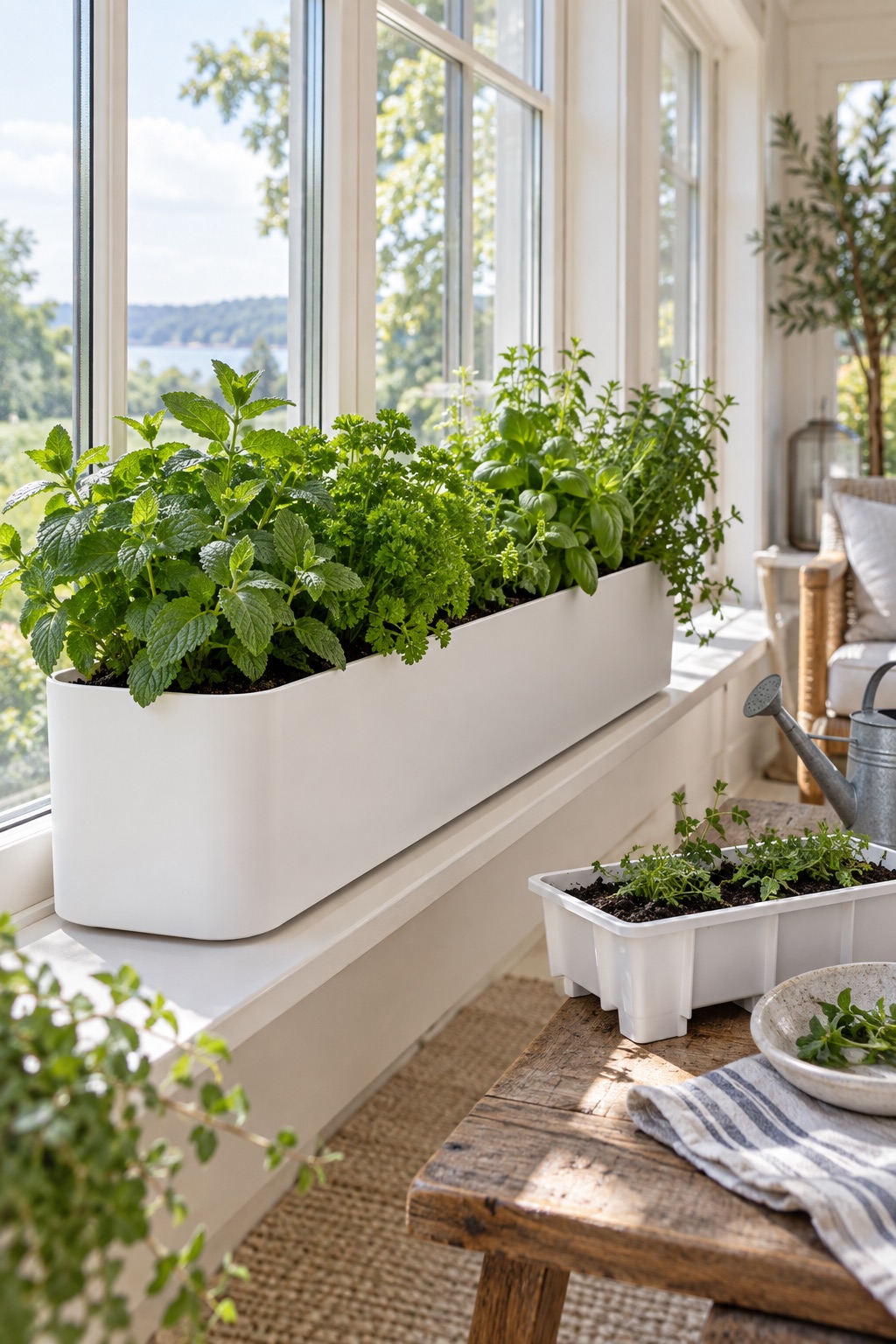
This long planter is made for a substantial ledge, sunroom, or railing arrangement. Its approximately 31-by-7-inch footprint offers room for several plants, while removable inner inserts make planting and seasonal cleanup less awkward than working inside one fixed trough.
A water-level indicator helps prevent blind refilling. That matters in a long container because one end may look dry even while the reservoir remains full. Combine plants with similar moisture needs; basil, parsley, and mint are a better group than mixing basil with drought-tolerant rosemary.
Measure the supporting surface before buying and account for the weight of water and wet mix. If it is mounted near a railing, use hardware specifically rated for the planter and the fully saturated load; the planter’s railing brackets may be sold separately.
Key specifications: about 31 inches long and 7 inches wide; removable plant inserts; self-watering reservoir; water-level indicator; indoor or outdoor design.
4. Vego Garden 15-Inch Self-Watering Trellis Planter
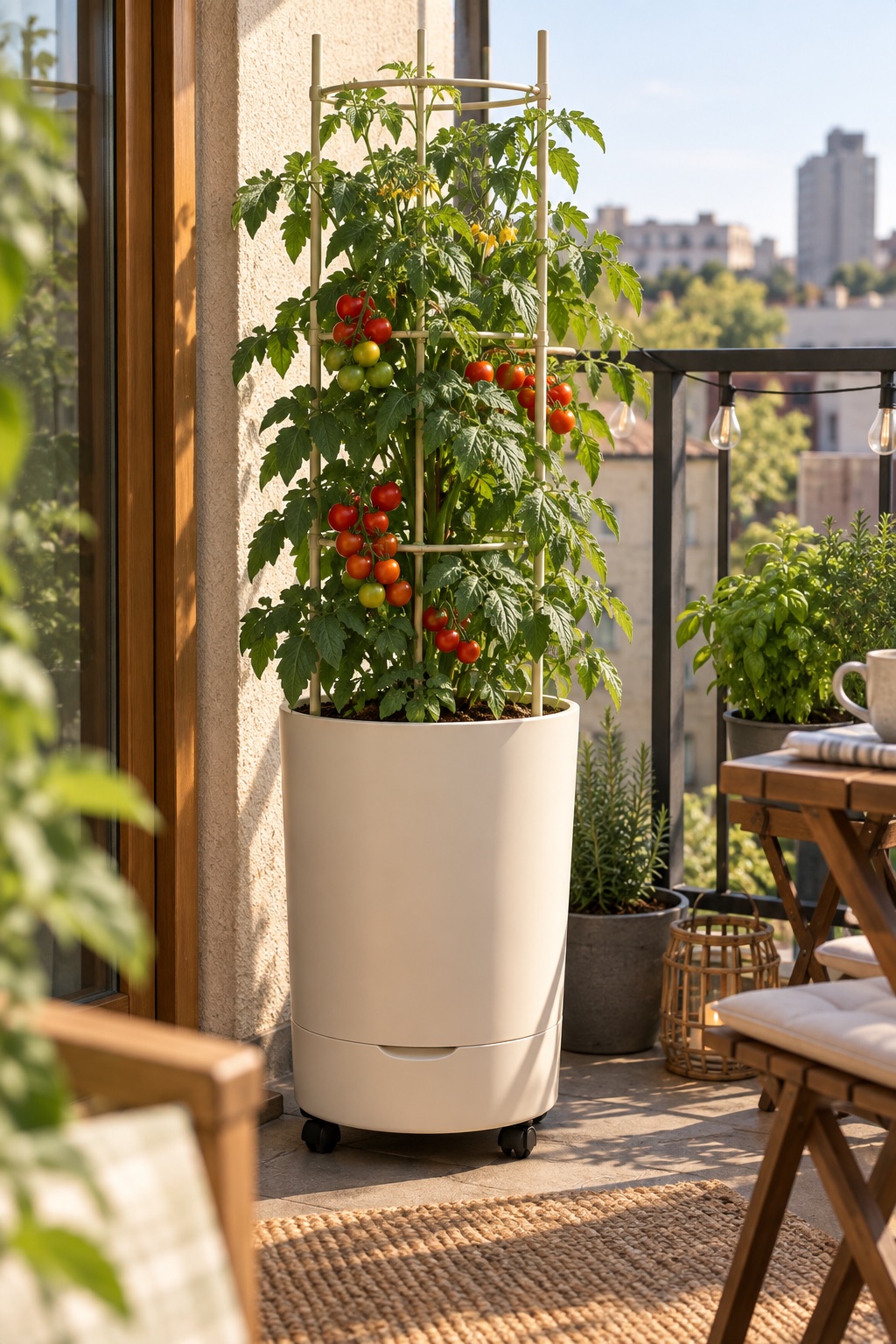
This tall planter is the most crop-focused choice in the group. A built-in trellis gives a compact tomato, pepper, or climbing flower vertical support without requiring a separate cage. The reservoir and water indicator help buffer the fast moisture swings that container tomatoes experience in summer.
The rolling base is useful on a balcony where sun angles change or where a plant needs to move during severe weather. Always roll it slowly on a level surface, and lock or block the wheels if the planter will sit near stairs or an open edge.
A 15-inch planter still needs a compact variety rather than an indeterminate tomato that can outgrow the support. Use fresh container mix, tie stems loosely with soft plant tape, and check the trellis after windy days.
Key specifications: approximately 15-inch-tall planter; integrated trellis; water-level indicator; rolling base; indoor or outdoor use.
5. Vugosson Self-Watering Planters 7-Piece Set
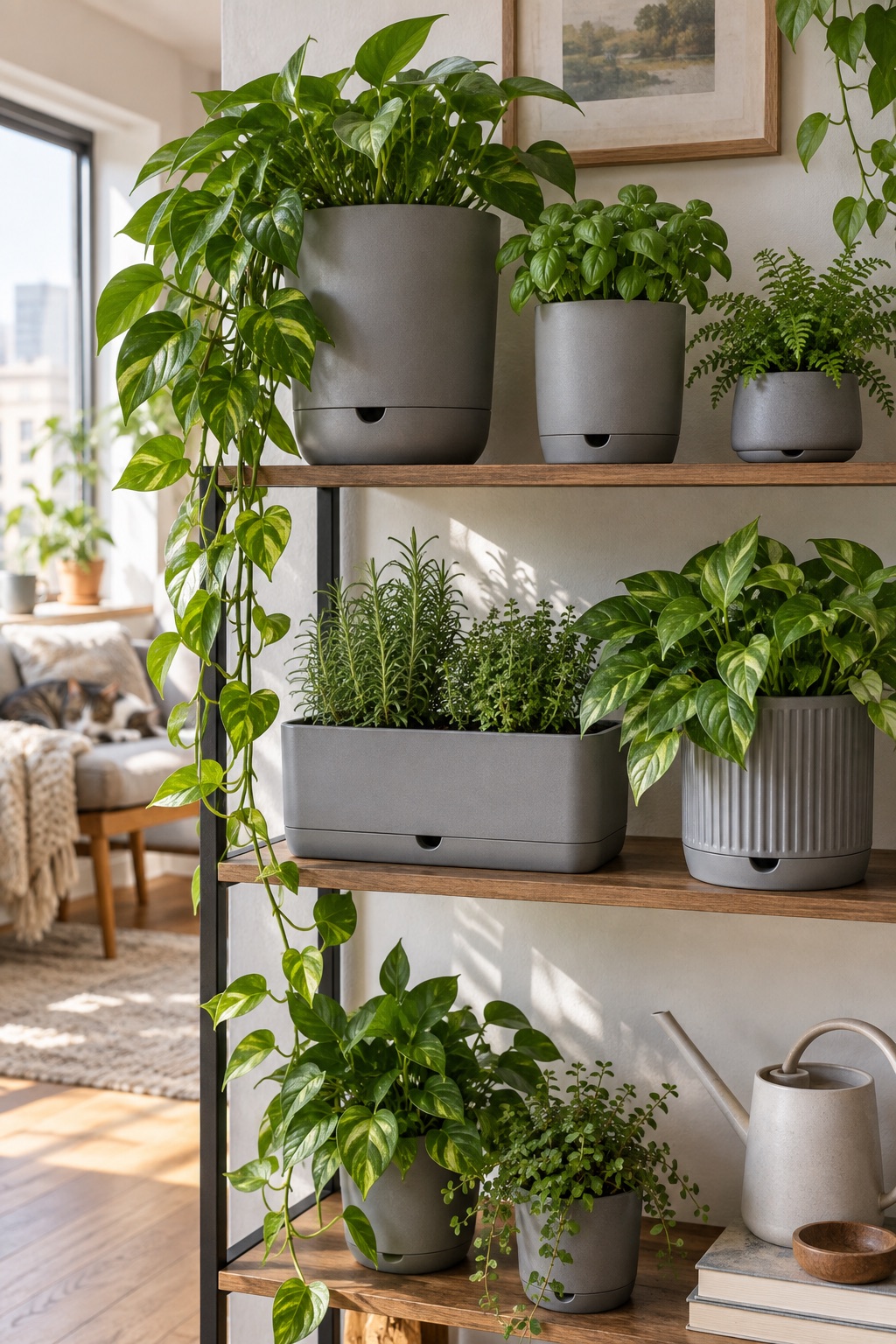
A mixed-size set makes sense when your collection ranges from propagation starts to trailing houseplants. This group combines small pots with larger rectangular forms, so it can organize a shelf without placing every plant in an oversized container.
The cotton-wick approach is straightforward: water sits below the inner pot and moves upward into the mix. Wick systems work best when the cord makes firm contact with moist soil. If the top remains dry while the reservoir is full, re-wet the mix from above and check that the wick has not shifted.
Different pot sizes also mean different refill schedules. A small planter near a hot window can empty much sooner than a larger one in indirect light, so inspect each reservoir rather than treating the set as a single watering zone.
Key specifications: seven-piece mixed-size set; round and rectangular forms; cotton-wick reservoirs; drainage slots; indoor display use.
6. OurWarm Windowsill Herb Planter Box Set
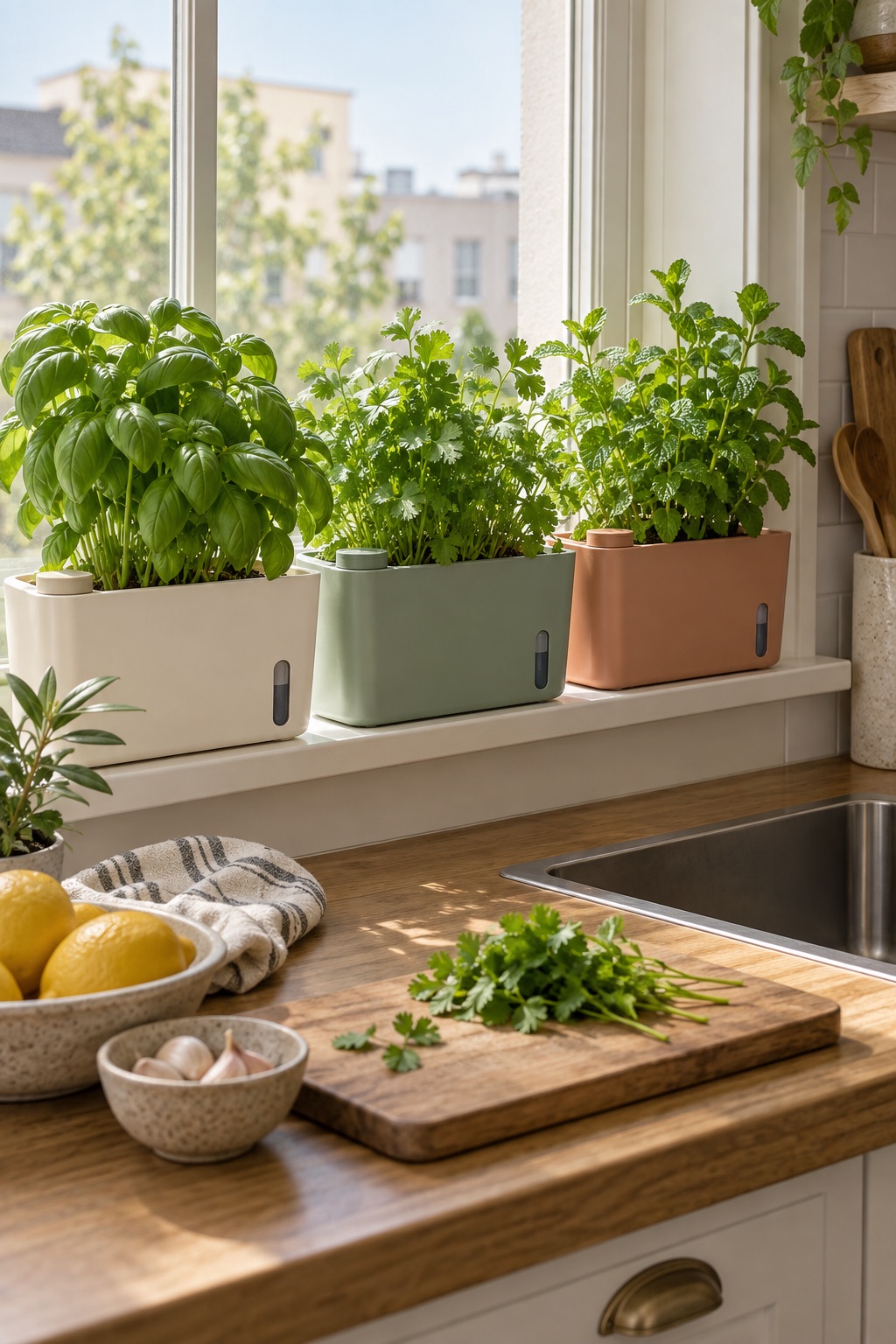
These 10.5-inch rectangular boxes are shaped for kitchen herbs and narrow ledges. The set of three lets aggressive mint grow separately from basil and cilantro while still creating a coordinated display.
A visual water-level window and top fill port reduce the need to lift the inner pot. That is helpful on a crowded sill, but the window should remain accessible rather than being pressed against glass or hidden behind foliage.
Measure both the sill depth and the clearance needed to open blinds. Keep leaves a few inches from cold winter glass, rotate the planters weekly for even growth, and harvest herbs regularly so air can circulate through the canopy.
Key specifications: set of three; approximately 10.5-inch rectangular format; visual water window; top fill port; wick-style reservoir.
7. WSMKSZ 12-Inch Large Self-Watering Planters
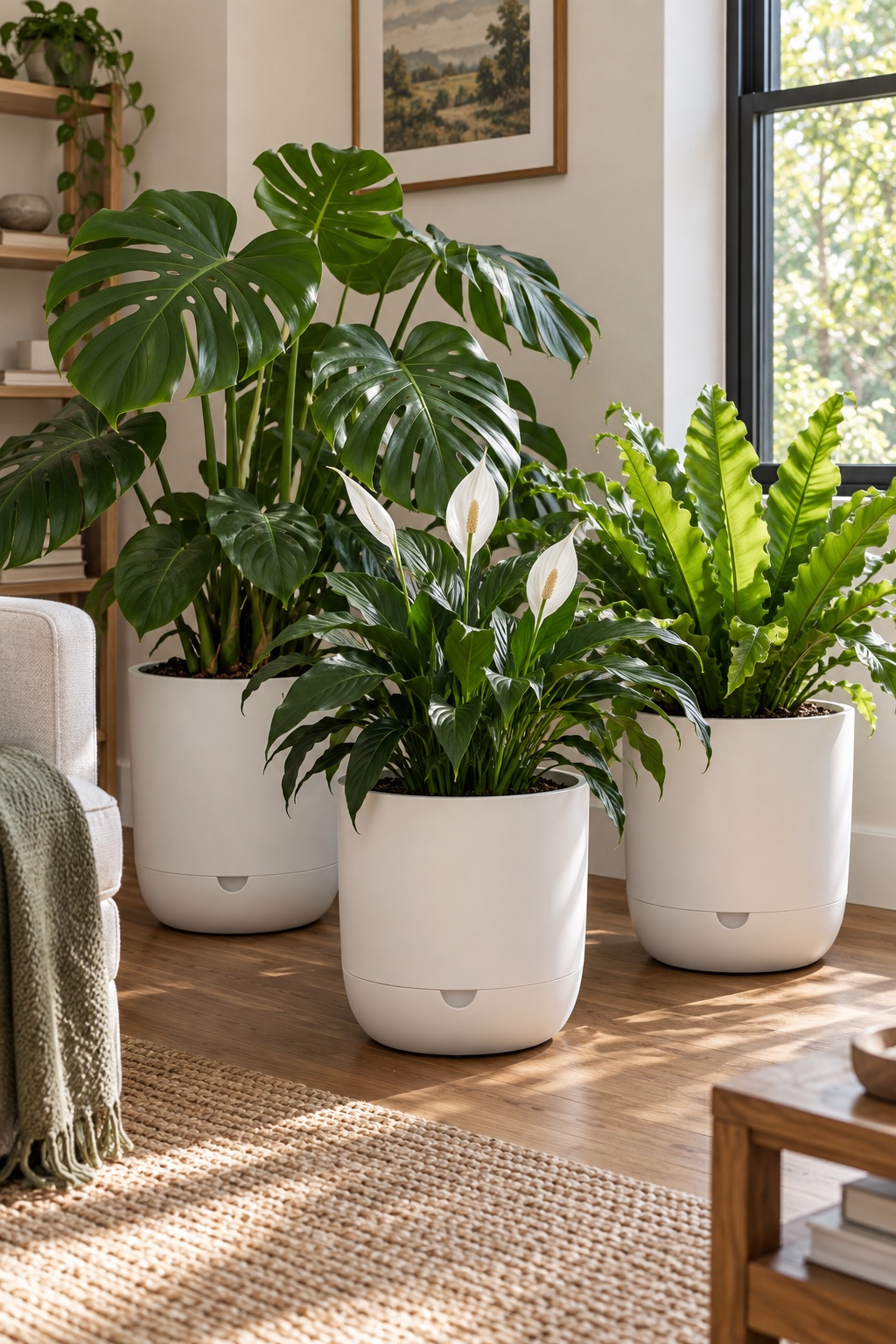
A 12-inch format is intended for established foliage plants rather than countertop herbs. It can be a useful next home for a peace lily, fern, or medium monstera that has genuinely outgrown an 8- to 10-inch nursery pot.
The deep reservoir reduces refill frequency, but it also increases the consequence of using dense soil. Choose a chunky, aerated mix appropriate to the plant, and avoid packing it tightly around the roots. A reservoir cannot compensate for compacted mix with too little oxygen.
Before placing a large pot on furniture, calculate the wet weight and use a waterproof mat. Allow at least 2 inches between the planter and a wall so leaves and the fill area remain easy to inspect.
Key specifications: 12-inch large-planter format; deep lower reservoir; inner drainage structure; suitable for established indoor foliage plants.
8. T4U 6-Inch Self-Watering Pots 4-Pack
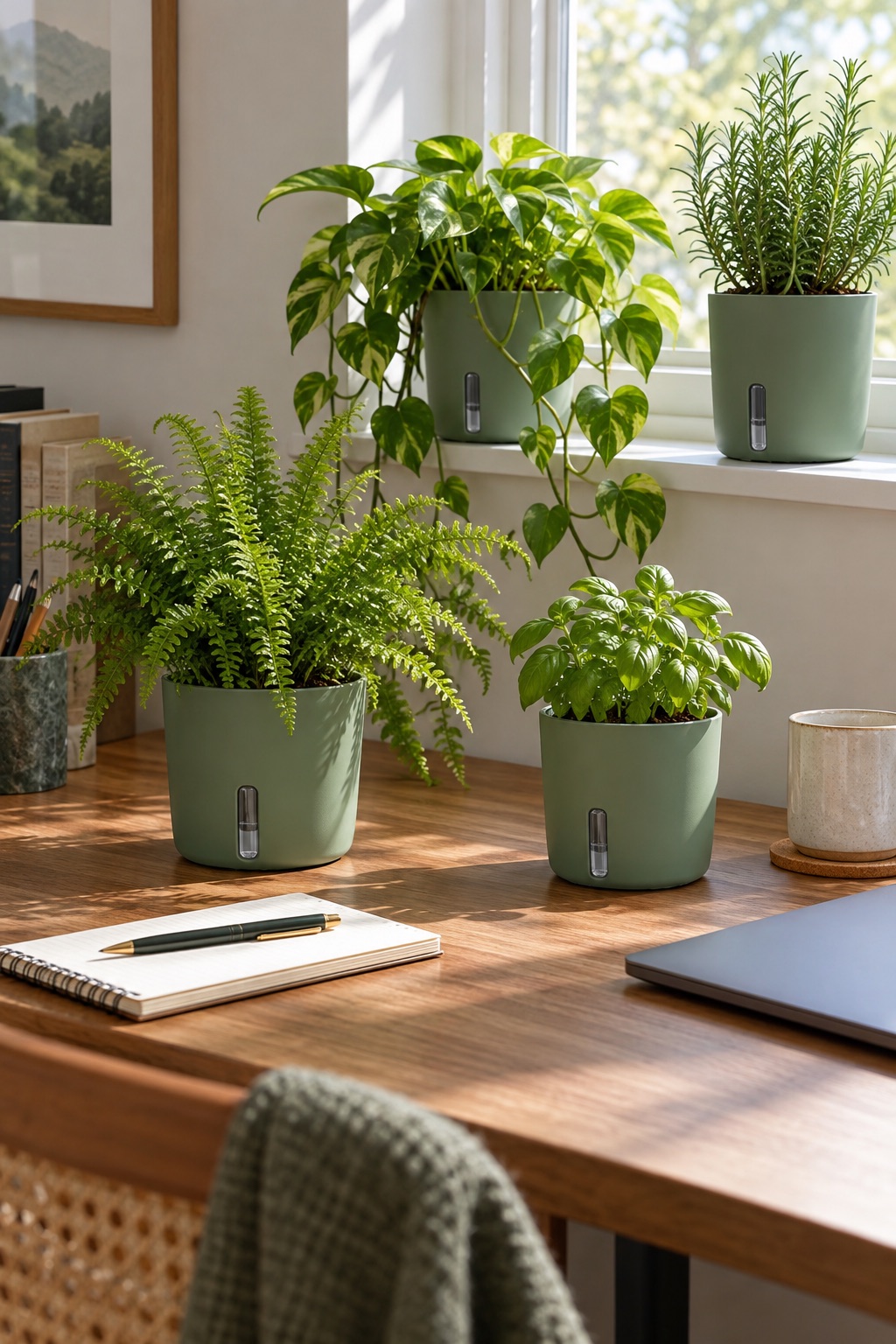
This four-pack is sized for small pothos, ferns, herbs, and other desk-friendly plants. The compact footprint makes it easier to distribute plants around a home office rather than crowding one large planter into the available light.
A clear level area on each pot provides a quick reservoir check. Use it as a refill signal, not an instruction to keep the chamber full continuously. Many plants benefit from a short empty period that allows more air to reach the lower root zone.
Keep pots away from electronics and use a protective tray during the first week after setup in case of spills. For rosemary or succulents, skip the reservoir and use a conventional fast-draining pot instead.
Key specifications: four 6-inch plastic planters; visible water-level area; compact reservoir design; indoor desk, shelf, or sill use.
9. HBServices USA 8-Inch Self-Watering Planter
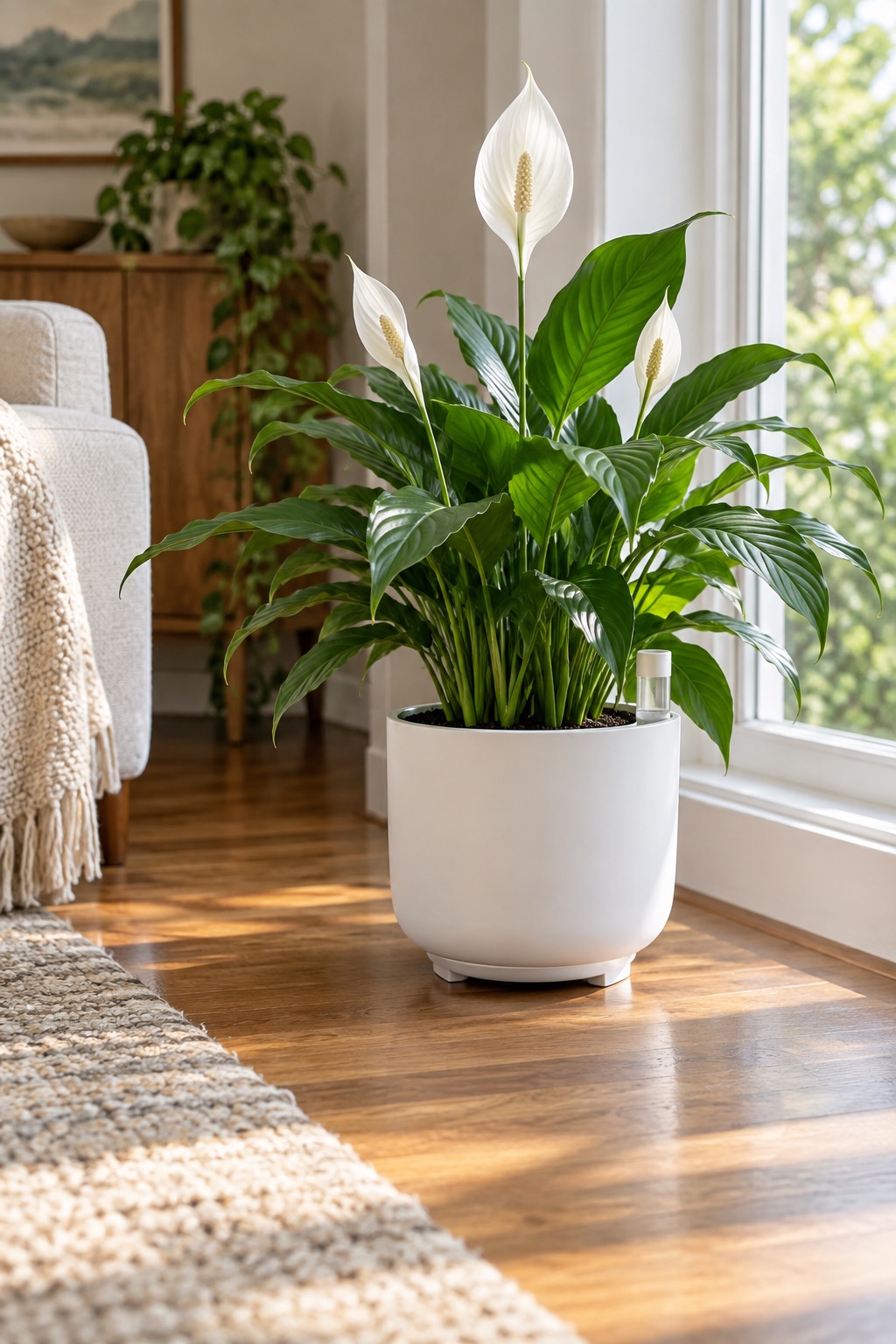
This 8-inch planter uses hollow soil-contact legs that extend into a lower reservoir. The design lets the mix draw moisture upward while keeping most roots above standing water. Open sections in the base also encourage airflow.
A clip-on watering attachment provides direct access to the reservoir, which avoids repeatedly soaking the surface. It is a good match for pothos, peace lilies, ferns, and similar plants that like consistent moisture but still require oxygen around their roots.
Because this design does not rely on a prominent float gauge, establish a simple inspection routine. Check weekly at first, clean the reservoir when mineral film develops, and use filtered water if your tap water leaves heavy deposits.
Key specifications: 8-inch round planter; deep reservoir; hollow soil-wicking legs; aerated base; clip-on refill attachment.
10. Mkono 4-Inch Self-Watering Planter 3-Pack
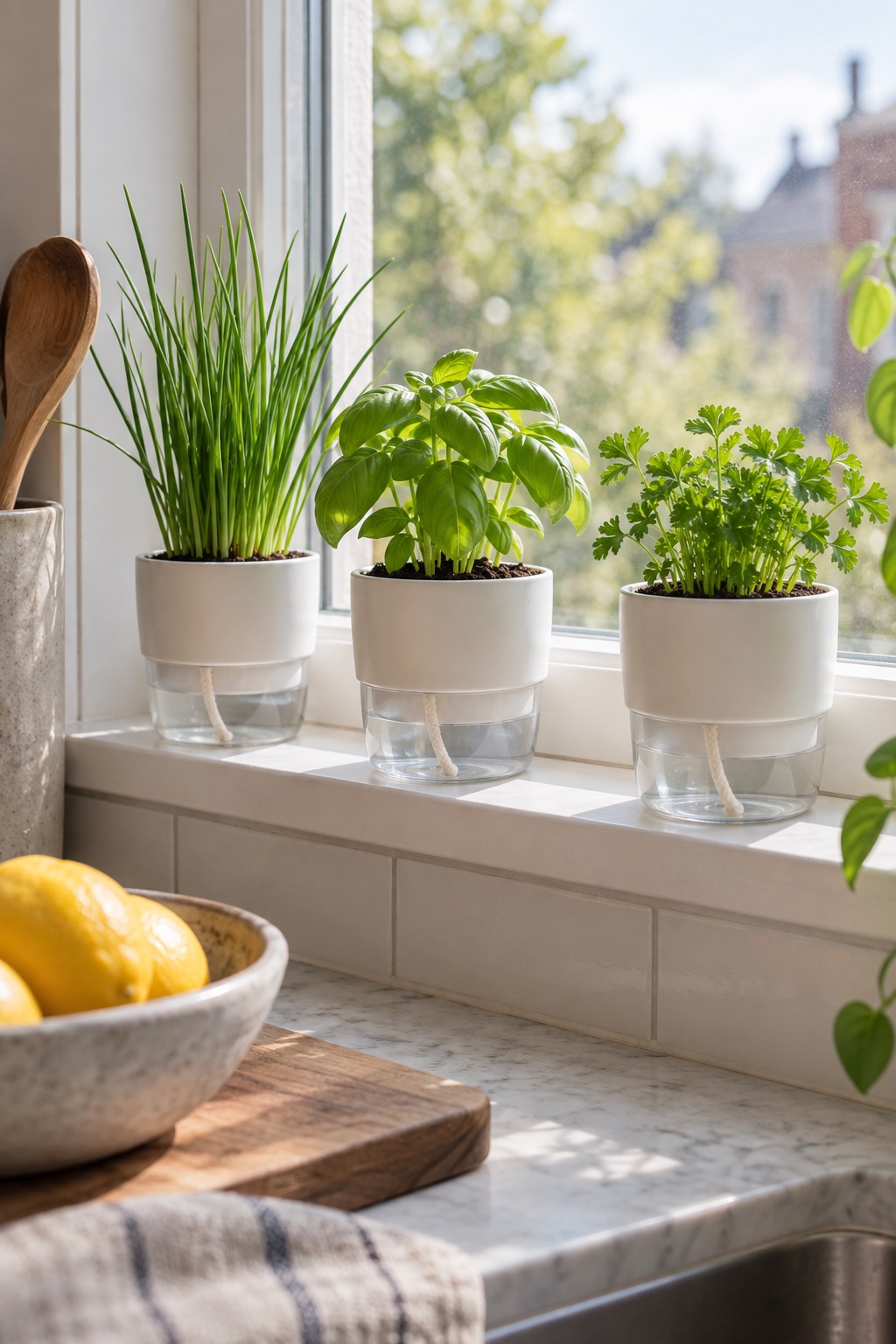
These small wick planters are best treated as starter pots. Their 4-inch scale suits chives, parsley seedlings, propagated pothos, or compact African violets, but vigorous basil and mint will need a larger container as their root systems expand.
The simple two-piece construction makes the water chamber visible and easy to rinse. Before planting, saturate the wick and thread it far enough into the potting mix to maintain contact. A dry wick may not restart reliably on its own.
Small reservoirs respond quickly to warm sun, heating vents, and grow lights. Check them every few days until you learn the plant’s consumption, and replace a stiff or mineral-crusted wick rather than increasing the water level.
Key specifications: set of three; approximately 4-inch pots; cotton-wick watering; removable clear reservoirs; best for seedlings and compact plants.
11. DECOPOTS 7.1-Inch Self-Watering Planter 3-Pack
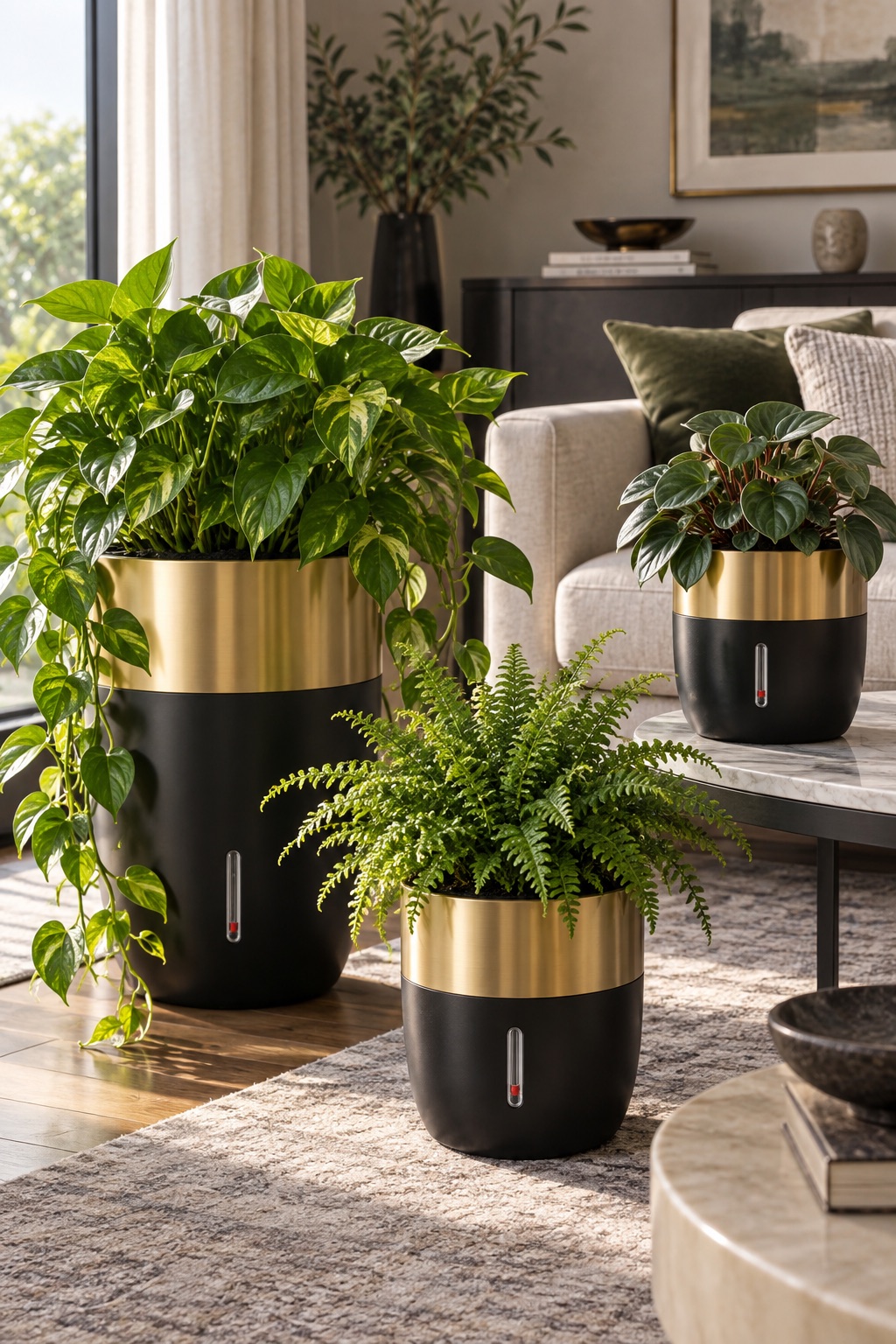
This three-pack combines a decorative two-tone finish with a practical level indicator. The 7.1-inch format is large enough for many common tabletop houseplants without becoming difficult to lift for cleaning.
The nested system separates the growing area from the main reservoir and is designed to support air circulation around the roots. Keep the indicator facing the room so you can use it, and leave enough space above the pot to remove the inner section during maintenance.
Decorative finishes still need ordinary care. Wipe splashes promptly, rinse the lower chamber every month or two, and avoid fertilizer buildup by occasionally watering from above and allowing excess solution to drain before refilling.
Key specifications: set of three; approximately 7.1-inch diameter; plastic nested-pot construction; water-level indicator; indoor or outdoor use.
How to choose the right size
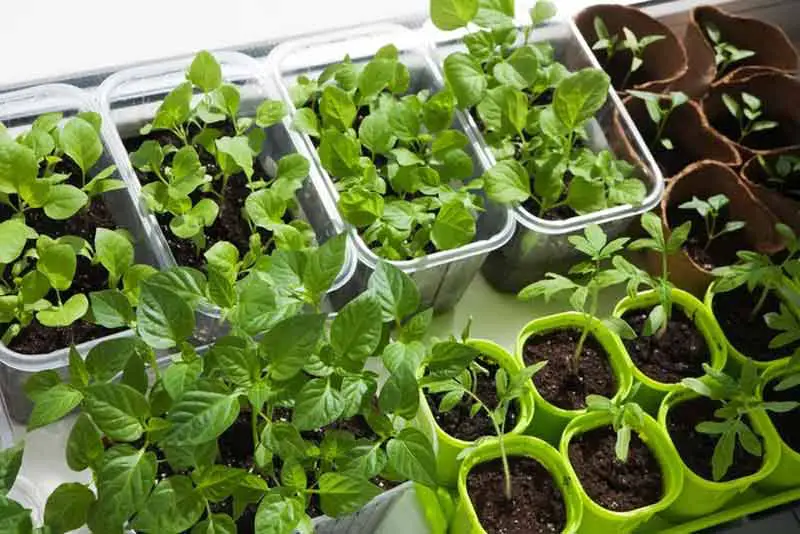
Start with the root ball, not the visible foliage. A new planter that is about 1 to 2 inches wider than the current nursery pot is usually sufficient for a small plant; larger jumps leave excess wet mix around roots.
Compact herbs commonly use 4- to 6-inch pots, established pothos and peace lilies often use 8- to 10-inch pots, and mature foliage plants may need 12 inches or more.
Also measure the usable surface. Leave room for the fill port, indicator, blinds, and leaf growth. A 10-inch planter on an 8-inch-deep shelf is not a safe fit even if the plant itself looks small.
Setup, safety, and maintenance
- Top-water after repotting. Keep the upper mix evenly moist for one to two weeks while roots grow toward the wicking zone.
- Use airy potting mix. Heavy garden soil can compact, wick unevenly, and deprive roots of oxygen.
- Do not refill automatically. Let the indicator approach empty, then follow the plant’s needs and the manufacturer’s instructions.
- Protect surfaces. Place a waterproof mat under large indoor planters and keep fill ports away from electronics.
- Prevent stagnant water. Clean reservoirs periodically and keep fill openings covered. If mosquitoes are a concern, never leave exposed standing water accessible.
- Open outdoor overflow paths. A reservoir used outside needs a working overflow so heavy rain cannot flood the root zone.
Frequently asked questions
Can every houseplant use a self-watering planter?
No. Peace lilies, ferns, pothos, African violets, basil, parsley, and mint often adapt well. Cacti, most succulents, rosemary, thyme, and other plants that need a pronounced dry period are usually better in conventional pots with fast drainage.
Why is the soil dry when the reservoir is full?
The wick may be dry, displaced, or clogged, or the potting mix may be too coarse to maintain contact. Top-water the plant, inspect the wick or soil-contact legs, and confirm that the inner pot is seated correctly.
How often should the reservoir be cleaned?
Inspect it monthly and rinse whenever you see algae, mineral film, or fertilizer residue. A deeper cleaning every one to three months is a reasonable starting point, with more frequent cleaning for clear reservoirs exposed to strong light.
Can self-watering pots cause root rot?
They can if the potting mix is dense, the reservoir has no overflow outdoors, or the plant naturally prefers dry conditions. The reservoir should supply moisture to an aerated root zone, not turn the entire pot into standing water.
Should fertilizer go into the reservoir?
Follow the planter and fertilizer instructions. When reservoir feeding is permitted, use a diluted solution to reduce salt buildup. Flush the potting mix with plain water periodically and discard the drainage before returning the pot to its reservoir.